Celebrating mixed identity in Emma Slade Edmondson's Mixed


About Author
Emma Slade Edmondson, co-host of the award-wining podcast Mixed Up, talks to ReadingZone about her new book, Mixed: Explore and Celebrate Your Mixed Identity, a deep dive into race and identity from the mixed perspective.
Emma also a sustainability consultant, writer, journalist, podcaster, TEDx speaker and presenter. She is a change maker and leader in sustainable fashion and founded ESE Consultancy, a creative strategic marketing agency working with brands for a more sustainable future.
Interview
February 2026
Explore and celebrate mixed identity with Emma Slade Edmondson, author of Mixed
Having been approached by parents and carers of mixed-race children for a book to support children in exploring and embracing their mixed-race identity, author and podcaster Emma Slade Edmondson decided to write one herself.
Drawing on her own and others' experiences growing up as a mixed-race child and with the shared knowledge from her Mixed Up podcast for adults, Emma Slade Edmondson's Mixed will support children with mixed heritage as they navigate questions about their identity and embrace each part of their heritage and culture with confidence.
ReadingZone caught up with Emma to find out what inspired her write Mixed, what she hopes young readers will take from it, and what she wishes she had known as a child.
Review: "Mixed is an important book in that it shows young people how to understand and celebrate what it means to be 'you'."
Q&A with Emma Slade Edmondson, author of Mixed
"The book aims to encourage young readers to explore their own cultural roots with curiosity and confidence and to feel proud
of the richness, resilience and creativity that comes from holding more than one heritage within them." Emma Slade Edmondson
1. Hello Emma, thank you for joining us on ReadingZone. Can you tell us a little about yourself and your work in sustainability, and how you became an author and podcaster? What kinds of issues do you enjoy exploring through your work?
I'm a sustainability consultant, co-founder of an ethical marketing and production house, author and podcaster, and all of my work really sits at the intersection of social justice, identity, climate and culturally rich storytelling.
I've always cared deeply about both social justice and the environment and I know that these two themes are inextricable from one another. The approach to all of my work really stems from this knowledge as well as personal curiosity, lived experience and a desire to understand how the systems around us shape our lives.
Through my work I have always sought out angles and themes that are not yet being discussed enough and I launched my first podcast - Mixed Up - with a friend because I wanted there to be a safe and accessible space for Mixed Race people to tell their stories and find community. Up until this point I couldn't find anywhere that existed for this, so myself and my co-host created it.
Building a space for conversations about identity, belonging, race and heritage through the lens of the mixed-race experience really opened up new ground and emboldened people to tell their stories. I became an author off the back of launching the podcast with my first book 'The Half Of It - Exploring the mixed race experience' and to be honest, I've been asked so many times by parents and care givers what there is available for children in this space that I decided to write the book I would have wanted. That book is Mixed: Explore and celebrate your mixed identity'
2. Can you tell us what kinds of questions you explore in Mixed: Explore and celebrate your mixed identity - and what kinds of discussions you hope it will prompt?
Mixed explores what it means to be of mixed heritage, it explores the ways in which you can positively connect to your different cultures, while sharing the history of mixed people and groups.
It discusses how you can talk to your parents and others about what being mixed race means to you and what your experience of it is.
It explores the way in which people often feel the need to impose their definition of who you are on to you and how to combat this as well as asking children to interrogate how experiencing this feels.
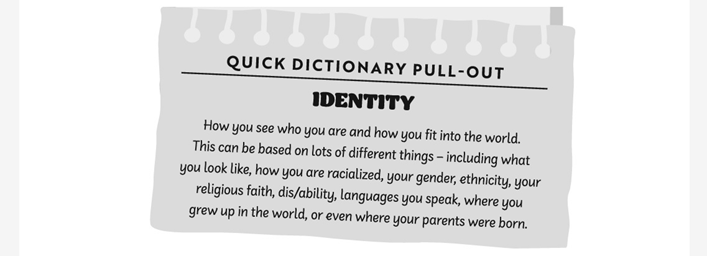
Finally it looks at how identity and the discovery of it can feel fluid - particularly to Mixed children and people as they move through life, and how discovering different parts of your identity and perhaps aligning more with one part than another at any given time is perfectly valid and normal. It raises questions around belonging and how we can foster that for ourselves as mixed race people.
3. How have you drawn from your own experiences of being mixed-race, and your Mixed Up podcast, in writing Mixed?
When I was young I remember there being a lot of questioning . . . What felt like an incessant need for others to unpack and define 'who' and perhaps 'what I was' seemed to be to an undercurrent theme and from quite young I believe I knew instinctively that it was inextricably tied to the idea that I was a mixed-race child, and later as the boom and bust of youth arrived - a mixed-race teenager. And outside of school hours when I was seen with my family - I fielded questions about whether I was adopted? Where was my Black parent? How could this be my mum? Why didn't we look alike? Were those my step brothers? The last question I always found left a particularly bad taste in my mouth as we never used that kind of language in my household. My brothers are my brothers - it's as simple as that . . .
I remember school mates, university friends and strangers confidently telling me what they thought I was, as if my own story were a puzzle they could solve. Some days, I felt like I could belong across cultural divides. Other days, I didn't feel I belonged anywhere at all. I don't think I became aware of this until I was in my 30's but those small moments, a question in a hallway, a look of confusion at a family gathering, quietly shaped how I saw myself.
There wasn't one particular moment when things changed for me but I do know that finding my voice and the confidence to assert myself and my identity began with creating space for other voices. In 2020 I launched the Mixed Up podcast - exploring race, identity and belonging through the lens of the Mixed race identity. The podcast was born from a simple idea: that mixed heritage people were asking for a safe space to talk about who they are,about their lived experiences and their histories without having to simplify them?
What I learned through those conversations surprised me. Again and again, guests shared the same sentiment - they were not just asking to be seen, but to be understood. Belonging, I now know, is as much about fostering community and confidence and creating spaces for others as it is about finding out where you fit.
The podcast became a space for conversation rather than answers. I wanted to hear how other people navigated their own layered identities, how they made sense of heritage, multiple and blended cultural touchpoints, language, and belonging. Through interviews with ordinary mixed race people wanting to share their stories to those with extraordinary stories of displacement and loss, anti miscegenation and adoption to conversations with mixed actors, historians, psychologists and actors and even a pretty iconic moment with Mel B - each episode was part therapy, part learning curve. Through dialogue, I started to see my own experiences reflected back to me and I felt an immense sense of connection and pride.
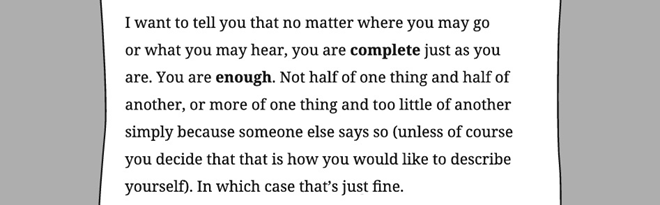
Those conversations eventually asked for a different kind of home. Writing Mixed – Explore and Celebrate Your Mixed Identity felt like the perfect next chapter. I wanted to create something young people can hold in their hands, something families and educators could return to. In a world where identity is often debated, categorized, or reduced to headlines, it is my hope that the book offers gentle guidance, that it can facilitate reflection, recognition, and a permission for children to see themselves, not as half - but as whole - not too much of one thing or not enough of another half of anything, but whole.
4. How is Mixed organised? Why did you take this approach, including adding questions and activities for your readers?
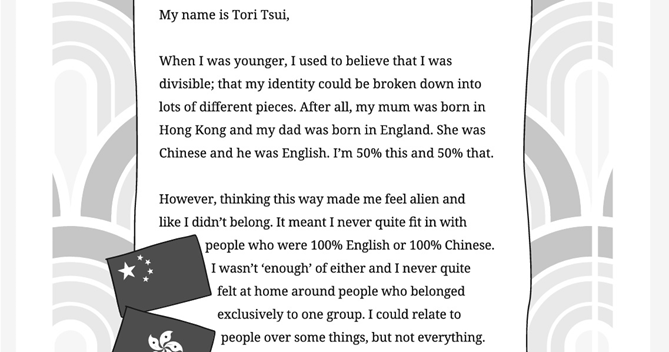
There are two things I really love about Mixed - Explore and Celebrate Your Mixed Identity. Firstly - that the book is based on the idea of pen pals and so each chapter starts with an inspiring letter from a Mixed Race icon with lots of wisdom to share.
Because the book features letters from the likes of poet Dean Atta, footballer Ashleigh Plumptre, actress Jessie Mei Li, author Jassa Ahluwalia, and activist Tori Tsui among others readers will get a really broad insight into a range of different lived experience perspectives that traverse different cultures and ethnicities and this is very much purposeful to give the book as much inclusivity as possible. I took this approach because I hope this will help as many readers as possible feel seen and that parents and educators will use these letters as tools to foster conversation and exploration with their students.
Secondly I'm really proud of how many practical exercises I've been able to include in each chapter of the book that can be done between child and a parent, caregiver or educator - from working on talking about our Mixed identities and learning to describe ourselves in a way that suits us to learning terms and language like 'cultural homelessness' and 'misidentification' to help us describe uncomfortable interactions and situations that might come up, to creating recipes that reflect your mixed heritage.
The book is structured so that the experience of reading it is gently guiding but also interactive. The idea is very much that the answers to difficult or challenging questions are very much for the reader to decide. This is purposeful because I am all too aware that one of the things Mixed people seem to find to be a unifying experience is the idea that they are often told - not asked - about their identities and 'who they are'.
Ultimately, I hope this book helps its readers - whether mixed children, parents, educators or otherwise - understand and appreciate that the mixed race identity is best approached as an ongoing conversation, and a dialogue - not a destination or a foregone conclusion.
5. Can you tell us more about the letters you've included through the book. Who are they from, and what do they bring to Mixed?
The book features personal letters from Dean Atta, Tori Tsui, India Amarteifio, Ashleigh Plumptre, Jessie Mei Li, Ryan Alexander Holmes, Asia Jackson, Jassa Ahluwalia, Ariana Miyamoto, Fola Evans-Akingbola, and Melissa Hemsley.
Each contributor has been chosen not only for their achievements and inspiring life stories but for their honesty, insight, and willingness to share their lived experiences as mixed-heritage individuals. Their stories and cultural backgrounds are broad and span the worlds of literature, sport, climate activism, food, film, fashion and beyond and reflect the rich diversity within mixed race experience itself.
My pen pallers offer a broad spectrum of perspectives: stories of navigating belonging, challenging stereotypes, seeking information from family elders, embracing multiple cultures, and travelling far from home to explore your culture. Their life journeys highlight both the complexities and the joys of growing up mixed, affirming that we all have the right to describe and define our own unique experience. For mixed-heritage children, I hope these letters provide more than inspiration and that they offer reassurance, visibility and encourage agency and confidence.
Through these voices, the book aims to encourage young readers to explore their own cultural roots with curiosity and confidence and to feel proud of the richness, resilience and creativity that comes from holding more than one heritage within them.
6. The book covers so many questions and reflections on growing up mixed-race and mixed-heritage, but is there one thing you would like your readers to take from Mixed?
The biggest thing I'd like readers to take away from reading this is the confidence to explore their multiple heritages and the tools to express who they are with pride. Without feeling pressured to 'choose' or align more with one side of their heritage and culture than another. I'd like readers to come away feeling they have agency to define and describe themselves as who they know themselves to be and to push back on people telling them who they are based on their own assumptions.
7. Which section do you wish you could have shared with your younger self, and why?
I think for me the chapter I would have most liked to have as a child is the chapter called 'The Chat', which begins with a wonderful letter penned by Fola Evans-Akingbola which speaks to being questioned about the legitimacy of your identity and your heritage by a stranger through the recounting of a story about a 'chat' or conversation Fola had with a taxi driver. The letter is equal parts affirming as it is humorous and the chapter goes on to encourage children to open a dialogue with their parents about how it feels to grow up mixed heritage.
This chapter equips children with the agency and the tools to open up this chat with their parents and I truly wish this was something I could have done as little me. I hope it helps children today have these conversations with their parents before they get to my age!!
8. Are you planning more books for younger readers? And if you ever get time to relax, what do you enjoy doing most with your time out?
I am currently writing an illustrated fiction storybook or gift book for younger readers that takes place on a fictional planet and explores the emotions that rule us through a central protagonist that I think younger readers will love.
When I'm not writing or heading up my marketing consultancy and production house - Good Form - I like to go running, I love watching films and reading of course :)
School Visits: Do you offer events for schools? What is included in your events, and how can schools get in touch with you to organise a visit?
Yes, I absolutely offer events and workshops for schools, and they're one of my favourite parts of the job. I love having the opportunity to meet students in person (or virtually), hear their ideas, and create space for open, thoughtful conversation.
My school events are interactive and tailored to the age group. They can include an author talk about the book, readings from my book, and discussions and exercises around themes for example, letter-writing exercises, and using the exercises in the book to explore identity, Schools can get in touch via my publicist, and I'm always happy to discuss how to shape a session to fit specific curriculum links, themes or focus days.
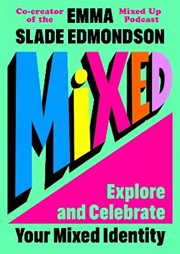 Mixed: Explore and Celebrate Your Mixed Identity