Curtis Jobling unveils Vampire Empire, his action-packed fantasy series!


About Author
Red Tide, the first book in the Vampire Empire series by Curtis Jobling, takes readers into a world of Vikings, Norse legends - and vampires!
Curtis Jobling is an author, illustrator and animation creator. He has designed and created some of the UK's best loved children's shows, including the BAFTA-winning Bob the Builder, Frankenstein's Cat and Raa Raa the Noisy Lion, while also writing and illustrating numerous picture books for young audiences.
His novels for older readers include the bestselling Wereworld series, now adapted into a major animated series for Netflix, Wolf King.
Interview
May 2026
Vikings, Norse legends - and vampires! Curtis Jobling introduces Vampire Empire.
Red Tide, the first in the Vampire Empire series, immerses the reader in the ancient world of Vikings and the Norse gods and legends. Set on a tiny Scottish island, the novel gradually shifts from the everyday details of ordinary life at that time, to something darker and more horrific.
ReadingZone caught up with author Curtis Jobling to talk about what influences his writing, researching the Vikings - and his love of all things horror.
Review of Red Tide: "This fast-paced tale makes for a riveting read." Read a Chapter from Red Tide.
Q&A with Curtis Jobling: Bringing fantasy horror into a real life setting
"I've taken elements from Pictish history, Norse mythology, eastern European folklore and a
smattering of Lovecraftian horror, and blended them all together."
1. Hello Curtis, thank you for joining us on ReadingZone! Can you tell us a little about yourself and how you became an author, and the kinds of books you enjoy writing?
I found my way into writing via a rather circuitous route. I worked for years in the animation industry as a production designer and art director (BAFTA winning Bob the Builder and Raa Raa the Noisy Lion) but was always itching to tell my own stories. This led to my writing and illustrating my first picture book in 2001, Frankenstein's Cat (which also became a BBC animated series), and whilst further picture books followed, my sights were already set on writing a novel.
In 2011, Wereworld: Rise of the Wolf was published by Penguin and shortlisted for the Waterstones Book Prize. Since then I've been a full time writer, with 12 novels published to date. The Wereworld book series has also been adapted into a major animated show on Netflix, titled Wolf King. You might be able to tell if you look at my body of work that I'm a huge fan of the fantasy and horror genres.
2. What inspired your new series, Vampire Empire: Red Tide, about vikings, vampires and hidden family secrets? It's very filmic - have you drawn on any favourite films or books in writing this?
I've always loved epic mythology. As a child I was obsessed by the Odyssey, and a terrible journey peppered with danger, death, trials and monsters. That's at the heart of the broader Vampire Empire story, with gods and horrors descending. But Red Tide kicks things off on a smaller and more earthbound scale, on the tiny Scottish island of Unst.
Undoubtedly my love of film and television have played their part - the notion that my writing is filmic has been brought up before. I grew up on black and white TV serials that my Dad enjoyed as a boy, like King of the Rocket Men and Flash Gordon. I loved the Kirk Douglas and Tony Curtis movie, The Vikings, along with countless monster movies from Universal Studios, through Hammer cinema, into the "creature features" of the eighties such as The Thing and An American Werewolf in London. The frights and cliffhanging endings to each chapter are directly inspired by each of these wonderful cinematic memories.
3. How steeped were you in Norse mythology and Viking life when you wrote Red Tide? Where did you go to find out all the details about life at this time, over 1000 years ago?
I knew more about Greek mythology than Norse, truth be told, so I went into a deep dive to build my own mythology into this novel. I've taken elements from Pictish history, Norse mythology, eastern European folklore and a smattering of Lovecraftian horror, and blended them all together. There was a lot of research undertaken to make sure as many of the factual elements about that time were covered, but there's also plenty of artistic licence in there as well!
4. What are the challenges in combining fantasy elements in the story within a real world setting?
The lovely thing about writing fantasy in a real world setting is that it doesn't require as much worldbuilding as a straight fantasy novel. For example, when I wrote Wereworld, that involved creating a convincing and believable fantasy land, whereas if we're starting a story in Shetland, well . . . we all know what Shetland looks like.
Making the reactions of characters to the "fantastic" is where the challenge is. If your protagonist suddenly encounters a crazy viking who just won't die no matter how many bits they chop off him, that's not going to be a walk in the park for them. How they react is how real the fantasy then becomes.
5. What inspired you to use the island of Unst for your setting? How well do you know the Shetland islands?
I enjoyed countless Scottish holidays as a kid, covering much of the mainland and islands off the west coast. Shetland and Orkney are two parts of Scotland I've yet to visit, though I've always been fascinated by them, Up Helly Aa always being such a romantic festival to me.
I knew I needed to start my story where the Norse had a strong foothold, and that was obviously Shetland, which was an outlying part of their kingdom around 900 AD.
6. Can you tell us about your main characters, Hilde and Cormac, and why you decided to write the novel from each characters' perspective?
Hilde Blackheart is the daughter of Jarl Frida, the chieftain of the tiny Norse/Pictish settlement on Unst. Hilde has one hell of a temper and dreams of becoming a legendary shieldmaiden, as her mother was, when she grows up.
Cormac Tullock is the blacksmith's boy, used to hard work and toiling over the anvil with his pa. He doesn't have any dreams for the future, though his past hides a huge secret that even he is unaware of.
I love the idea of splitting characters up because I can cover more ground in a story, bringing more colour to the world.
7. The story is action-packed and full of bloody battles. What was the most challenging part of writing it, and do you have any favourite moments?
Action is integral to Red Tide, with so many skirmishes, scraps and deadly duels. I'd have to say that the bad guys are always fun to write, especially when they have layers to them and they aren't one dimensional. There's Hydyr the Hungry, our lead antagonist in this book who is an absolute joy, as well as Frostmark, one of the Harrowed Men, a draugr who provides moments of horror in one breath and comic relief in the next.
8. While action-packed, the novel also explores themes of loyalty, courage and family. What kinds of discussions do you hope it could help inspire?
Good spot - the loyalty and courage of the three principal youth protagonists are all tested throughout the novel, some faring better than others. Though not blood related, the characters form an unconventional family of their own. Perhaps that's the discussion that spins off from the story, the notion that friends are the new family. Although to be quite honest, I just want readers to enjoy the book for what it is; pure horrific, historic escapism.
9. What next for Vampire Empire - and how many novels do you have planned? For readers who enjoy Red Tide, which of your other novels / series might they also enjoy?
The sequel is already in the works - BLACK HEART - and who knows, there may be future novels too. One book is never seemingly enough for me, my tales often having the potential to spin off into larger and longer tales.
If readers have enjoyed Red Tide, they should certainly check out my Wyrdwood novel, a folk horror set on the Isle of Man, which is effectively a Grimm Bros tale for a Stranger Things crowd. I'm writing its sequel, Greenteeth, presently.
Then there's the Wereworld fantasy horror series which has sold over a million novels worldwide - the first novel in that series, Rise of the Wolf, was shortlisted for the Waterstone's Prize, and as mentioned above the books have now been adapted into a new Netflix show, Wolf King.
10. What kinds of things do you enjoy doing in your downtime to escape writing - or to inspire you in your next writing project?
I enjoy walking the dogs with my family, and watching my youngest daughter knock lumps out of other girls playing both rugby league and rugby union. As a lifelong supporter of Warrington Wolves RLFC I'm still waiting for them to win the championship.
The aforementioned dog walking tends to be a great time for generating ideas, working through plot holes and spitballing stories.

Creative Challenge: You wake suddenly, hearing a thumping sound emanating from the corner of the bedroom. You squint, eyes adjusting to the dark of the room. There it is; the BOX, shrouded in shadows, drawing you closer, begging the question - what's inside? Describe what the box looks like. Describe your approach to it, and its effect upon your heart and mind, the building fear. Open the box - what's inside? Where's the thumping coming from?

School Visits: I visit schools, all over the UK and overseas. Schools and teachers can get in touch with me via my official website - www.curtisjobling.com - via the enquiry contact form.
I usually deliver three talks, presentations or writing workshops when I visit a school, each of which cover my work as an author, illustrator and animation creator. With that in mind, that's three areas of the curriculum: art, media, and perhaps most importantly literacy and reading for pleasure.
Obviously, all of my novels and TV shows are covered in every talk, and I work with audiences of every age, from early years, right through each key stage, up to and including college, VI Form and universities.

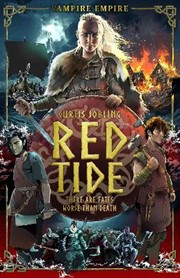 Red Tide
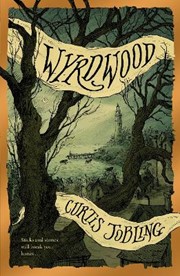 Wyrdwood
 Wereworld: Rise of the Wolf (Book 1)