Emma Shevah introduces her compelling new YA novel, My Name is Jodie Jones


About Author
ReadingZone caught up with Emma Shevah to explore the inspiration for her stunning YA debut, My Name is Jodie Jones.
Emma Shevah is half-Thai and half-Irish. She was born and raised in London, but has travelled and lived in lots of countries.
Emma studied English and Philosophy at university, and has an MA in Creative and Professional Writing. As well as being an author, she is Head of Literacy, an English teacher and a learning support teacher working with a range of neurodiverse students.
Hailing from a neuro-atypical family herself, she has four children and has written middle-grade novels and books for younger readers. My Name is Jodie Jones is her YA debut.
Interview
September 2025
Emma Shevah introduces her compelling new YA novel, My Name is Jodie Jones (David Fickling Books)
Read a chapter from My Name is Jodie Jones
Emma Shevah's love for words and literature shines out of her new YA novel, My Name is Jodie Jones, as its protagonist, neuro-diverse Jodie Jones, finds a path through a privileged but difficult home life and demands of school in a search for the freedom to define herself and her dreams.
ReadingZone caught up with Emma to explore the inspiration for her YA debut, what she hopes readers will find in its pages, and igniting a love of words and literature in her readers.
Review: "If you are going to read just one YA book this year, make it this one!"
Q&A with Emma Shevah: Exploring literature, words and the joys of neurodiversity in My Name is Jodie Jones
"I hope readers will enjoy the sentences and poems enough to seek them and more of them out. If they read some of the books,
or even this one, and think of words and sentences and their rhythms differently, that's a bonus."
1. Thank you for joining us on ReadingZone! Can you tell us a little about yourself, your day job, and what brought you into writing for children and young people? What tends to be your starting point for a new novel eg character, plot or something else, and what kinds of books do you enjoy writing?
Sure. Well, I've lived an unconventional life. After English and Philosophy at uni, I managed a restaurant in Chelsea for 15 months and then went travelling for years, working in a vegetarian take away in Bondi Beach, selling jewellery in Tokyo, fire juggling on Goan beaches, living in various countries, growing dreadlocks, living without electricity on a Himalayan mountainside for a couple of years.
We had our first baby there, in the Himalayas in India, and went on to have four in quick succession but no more births in Kullu Valley because that was a whole story in itself. When they were aged between 5 and 11, I did an MA in Creative and Professional Writing. I didn't want to limit myself to writing for children at the time but what got me started on that route was making up bedtime stories. I kept forgetting the ones they wanted me to tell them again, so I had to start writing some down.
Around that time, I became an EFL teacher, did that for ten years, and now teach English at a London school where I'm Director of Literacy and Oracy.
When I write, I start with a voice and a character. I have no idea where it's going and work the story out on the way. I have to entertain myself or I get bored and I like playful language so those are always features of my writing.
2. What happens in your new book, My Name is Jodie Jones?
Jodie Jones is a bright teenager with a difficult mother, a dad who has moved into his study and is clearly about to leave, and a brother who is embarrassed by her. She is in Year 10, and has high pastoral measures in place at school due to a past trauma and how this affects her. In an effort to exert some freedom in a life in which she has none, and to take measures into her own hands when the family crisis arises, she chooses not to do any school work, repeats the sounds of words she likes in lessons, and collects sentences, which infuriates her mother and causes concern with her teachers and her dad. The story is about parental abuse, friendship, choice, love, literature and trauma so it's quite a combo.
3. What inspired this story about a neurodivergent teenager and her home and school life?
My family is diverse culturally and also neurodiverse. I work with teens of all kinds every day and although their generation's experience of life is so different to mine, I'm aware of the issues they face with academic pressure and lack of freedom, choice or agency. I wanted to show a different thinker and her experience of life and home.
4. ...And what was your starting point for this novel? Did you enjoy writing it?
I loved writing it. I just opened my head and let it all come tumbling out. I was amazed anyone else liked it, to be honest. I had the opening chapters and went from there. It was such a joy to include some of my favourite writers and works of literature. And the darker, more troubling themes are important ones that we all need to be aware of and know how to act on.
5. Jodie Jones is hugely appealing, and whip-smart funny, but how did you approach writing a neurodivergent character in the first person - and why in the first person? How did you find out about neurodivergence and how Jodie Jones might respond to her experiences in life?
I haven't had a diagnosis but at least half of my extended family have ADHD and my son is diagnosed with it - it's highly likely I have it, too. I have a constant motor whirring in me, can't sit still and hyperfocus on things. There's probably autism in the mix as well, I should think. I work with Autistic children, have done courses in autism awareness, and love the way neurodiverse minds work, think, process and create.
It didn't occur to me to write this in the third person: Jodie Jones had to be the one to tell her story and the added bonus is that the reader has access to her fascinating brain.
6. Jodie Jones's love of language shines out from the pages; she collects sentences she loves, and is interested in the sounds of words and how they developed. Is this drawn from your own love of language - especially as an English teacher? Do you hope she can inspire your readers with a similar passion for language?
Absolutely. I used to read dictionaries and had a word of the week when I was a child that I tried to use, often completely wrongly. Literature has been one of my greatest joys. I read somewhere about the woefully low numbers of students studying literature in the US and here and far fewer teens read now. It's a cultural disaster. I felt the urge to try and showcase the wonders of language and literature - they are being lost in seas of STEM and phones, that is a sad, sad situation.
7. You give Jodie Jones a very difficult home life in an apparently privileged setting. Is this drawn from your own experiences as a teacher - how students' lives on the surface can be very different from people's realities? Do you have sympathy for teenagers who often have little say in aspects of their lives, including what they wear to school?
Children have far fewer freedoms now: I used to play outside all day on my bike and my skateboard and climb trees. I didn't have that much freedom as a teen, but I think I had more than most teens do now. We've always had to wear itchy ugly uniforms in the UK, but parents are more anxious about giving their children freedom, and a sense of freedom is huge for me. Not having any I find suffocating.
I sympathise with teens who are restricted and controlled - with anyone who is. And when we think of children and teens with awful home lives and abusive parents, we tend to forget that that happens in all eschelons of society.
8. Jodie Jones's relationships with her best friend and her brother's friend, Moses, bring a much-needed warmth to her life. Did you feel it was important to shine a positive light on friendships at this age?
Yes. Becca is an excellent friend - she is loyal and caring and loves Jodie Jones. Moses is the best: being supportive and calling people out is very cool, as is accepting people and appreciating who they are.
9. Other than a fabulous reading experience, what would you like your readers to take from My Name is Jodie Jones? What kinds of discussions do you feel the book will raise? Do you plan to write more YA novels?
I hope readers will enjoy the sentences and poems enough to seek them and more of them out. If they read some of the books, or even this one, and think of words and sentences and their rhythms differently, that's a bonus.
People should be aware of and accept others' eccentricities because they may be rooted in trauma. We are so quick to judge. I hope readers will discuss everything they find interesting or entertaining, from weird food combos, to sentences and words they like, to family dynamics, to their literary favourites, to how to recognise when something is wrong with a friend - or a parent - and what to do about it.
Yes, I do hope to write more YA. If enough readers read them, I'll write them. Those are my terms and conditions.
10. What does your free time look like when you're away from your desk / writing? What do you enjoy doing to relax and gather inspiration for more stories?
I tend to work a lot so when I get up from marking, writing or lesson planning, I need to get out and walk, preferably in greenery or by the sea. I'm into films and go to see them often with friends or watch with my son, who's studying film making. Two of my children cook and bake amazing food and do it professionally, so trips with them, even day trips, involve eating different dishes and cuisines in different places. I travel, read lots and spend time with my family, my friends and on my own in the vast and convoluted expanse of my head. Learning, thinking, reading and wondering are some of my favourite activities.
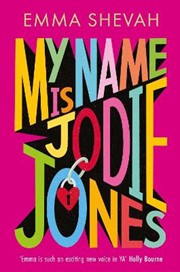 My Name is Jodie Jones