The Hug Button: Soothing separation anxiety in young children

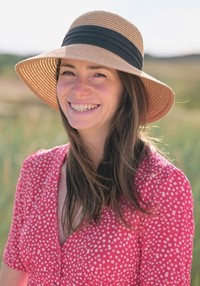
About Author
The Hug Button by Naomi Jones and Rebecca Ashdown is a comforting story for children experiencing separation anxiety when starting at nursery or school, or other new experiences.
Award-winning author Naomi Jones's picture books include The Perfect Fit and Thunderboots. Naomi lives with her family by the sea in Cornwall and loves wild swimming, playing netball, and reading.
Author and illustrator Rebecca Ashdown grew up by the sea and spent her childhood reading, writing, drawing, and running wild. Now, as a maker of picture books, she does much the same. Rebecca lives with her family in the countryside and works from her studio.
Interview
July 2025
The Hug Button (OUP) offers a comforting solution for anxious children
If your children are anxious about starting nursery or school, or other new experiences, The Hug Button offers a comforting way to manage their anxiety.
We spoke with award-winning due Naomi Jones and Rebecca Ashdown's about their new picture book, what inspired it, and the reassurance they hope it will give to children and their families.
Review: 'Heart-warming and positive, The Hug Button is the perfect story for sharing with anyone who is worried about separation.'
Q&A with Naomi Jones and Rebecca Ashdown: Exploring separation anxiety in The Hug Button
"I hope that seeing Matilda gradually overcome the separation anxiety will give children
the confidence to believe it'll get easier for them, too."
1. Can you tell us how you became an author / illustrator, and what other kinds of work you do?
Naomi: I've always loved stories and have wanted to be an author for as long as I can remember. I used to work in publishing in London but now I live in Cornwall and work as a freelance editor and mentor helping other children's writers develop their stories.
Rebecca: Even though I studied illustration at University I only started doing it as a job when my children were little. I was reading so many lovely picture books to them and that inspired me to return to something I'd always loved; drawing and writing stories. These days I also make and sell paintings and prints, teach weekly art classes to adults and work freelance as a graphic designer, which I did for many years before making children's books.
2. This is your second collaboration on a picture as author and illustrator, why do you feel your words and images work so well together?
Naomi: Rebecca is such a joy to work with. She has a gorgeous illustration style and it's so amazing seeing all the little details she adds as she brings my words to life on the page. I think we work well together because we both bring something completely different that when combined makes the story even more satisfying for readers.
Rebecca: I feel very lucky to be able to illustrate Naomi's words. Her writing has a wonderful spacious quality that acts as a springboard for me to complement. Both books have themes I identified with as a parent and that definitely helped with the process of visualising them. The icing on the cake is that we also really love working together in person, doing events, school visits and festivals. It makes our job a lot of fun!
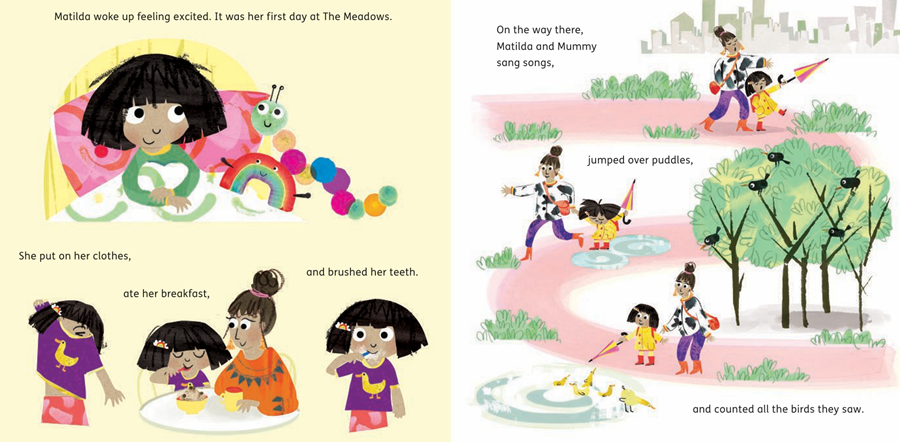
3. What happens in your new picture book, The Hug Button? How does Matilda change through the story?
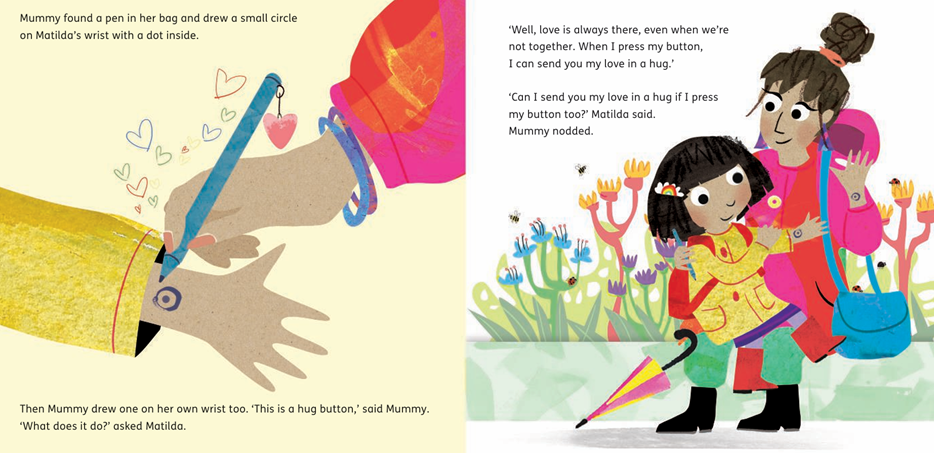
Naomi: The Hug Button tells the story of Matilda, a little girl who is excited to start at The Meadows. But despite having fun with her teacher and her friends, she finds it really hard saying goodbye to Mum at the school gates. Mum draws a hug button on both of their wrists so they can send each other hugs all day long. Gradually Matilda grows in confidence throughout the story until by the end she doesn't need the hug button anymore.
4. What inspired this story about a 'hug button'? Have you used it with your own children?
Naomi: This story was inspired by my youngest son who was similar to Matilda - he liked school and nursery but hated saying goodbye to me. We used a hug button on and off for a few years and it really helped him. I hope this story will help other families who are also struggling with separation anxiety.
5. How would you like The Hug Button to help other young children starting at school or nursery? What kinds of discussions do you hope it will encourage?
Naomi: I hope it'll create the opportunity to open conversations between children, teachers and parents. Seeing a character go through something you're experiencing can be really helpful as it makes you feel less alone. I hope that seeing Matilda gradually overcome the separation anxiety will give children the confidence to believe it'll get easier for them too.
Rebecca: Sometimes children can feel they're the only ones who are experiencing difficult emotions. I love the idea that exploring this in a book might show them that they are not alone, that it's quite normal to feel that way, and there are ways to get through it.
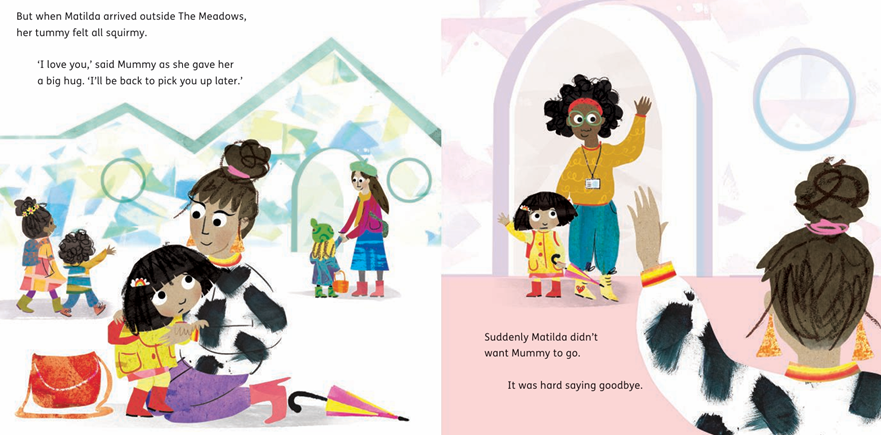
6. What was your focus for the illustrations for The Hug Button, and how do you maintain that through the story?
Rebecca: I really wanted The Hug Button to feel like a warm cosy hug. To do this, I made a mood board using soft, earthy colours and patterns. This helped me set the palette for the clothes, objects and environment. I wanted The Meadows to be an inviting place, so I used lots of leafy textures and colours, with round tables and windows, and lots of friendly flower beds. There are lots of bright colours in contrast to the soft muted backgrounds. This keeps the illustrations positive and eye-catching which is a nice way to engage a younger audience throughout.
7. What's your favourite moment in the story? Which pages are the ones you would linger over to explore and discuss with a child?
Naomi: I think my favourite moment is right at the end when Matilda no longer needs the hug button and passes it on to a new boy who is struggling to say goodbye to his dad. When my boys were little they would have lingered over the pages where Matilda counts ducks!
Rebecca: The page where Matilda realises her hug button has washed off then finds a way to overcome her anxiety. This spread encourages children to think their way out of a problem and to imagine sending an imaginary hug. It shows how powerful the imagination can be in overcoming a problem.
8. Do you have any suggestions for other activities to follow on from a reading of The Hug Button, or other approaches for children experiencing anxiety?
Naomi: I know from experience how hard it can be if your child is struggling with anxiety. Teaching them some simple breathing techniques can really help. It's important to remember that there are no quick fixes for anxiety, it takes time and might sometimes mean two steps forward and one step back.
Rebecca: I take slow, deep breaths and try to think of moments that made me really happy. If you can think of the best times you can believe there are more to come.
9. What other picture books have you created that could also be used to encourage children to talk about how they are feeling?
Naomi: Lots of my books touch on emotions in some way! In How to Catch a Rainbow, Freya gets very cross and frustrated when she struggles to find all the colours in the rainbow. One More Try explores perseverance and The Perfect Fit looks at feeling different. In Thunderboots which is also illustrated by Rebecca, Trixie loses confidence in herself when she finds reading harder than her peers.
Rebecca: Thunderboots (Naomi Jones/Rebecca Ashdown Oxford University Press) is a really good example of how talking can help. Once Trixie shares her fears about school with her Dad he's able to share his experiences with her and they can work out a plan to help her.
10. What activities take you away from your desk / studio - and help to inspire more story ideas and creativity?
Naomi: I get inspiration from all kinds of places. I love to read all kinds of books (apart from horror), I love meeting friends and other writers, walking my dog on the beach and exploring other parts of Cornwall.
Rebecca: Ideas have a habit of popping into my head just when I'm not expecting them, or when I'm doing something completely unrelated to work, so downtime is vital. I like to walk the dog and dig in my allotment. I'm learning to play the flute which is brilliant! Reading and spending time with my family fills my creative cup and I keep a sketchbook by my side for when inspiration strikes.
 The Hug Button
 Thunderboots