Pirates, orphans and hidden treasure: Doug Naylor introduces Sin Bin Island


About Author
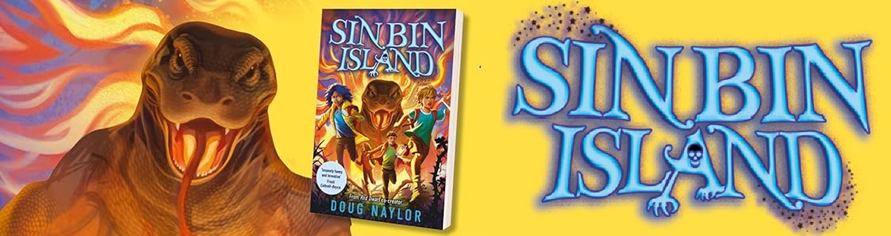
Screen writer Doug Naylor spoke to ReadingZone about his first children's book, Sin Bin Island, an adventure-packed tale of lost treasure, dark legends and piracy!
Doug is a British Emmy-award-winning television writer, Sunday Times bestselling novelist, and an award-winning TV director. He is best known as the co-creator (with Rob Grant) of the iconic sci-fi sitcom Red Dwarf. He penned the number one single, 'The Chicken Song'. Sin Bin Island is his first children's novel.
Interview
September 2025
Pirates, smugglers and hidden treasure: Doug Naylor introduces Sin Bin Island (David Fickling Books)
Doug Naylor, the co-creator of iconic television series Red Dwarf, talks to ReadingZone about Sin Bin Island, his debut children's book and the first in a series that follows a group of 'wayward' children as they their survival skills - and strong friendships - at a grueling 'pirate school' orphanage.
Funny, cinematic and packed with local legends, jeopardy and great characters, Sin Bin Island is a Blytonesque adventure that deserves to be savoured and enjoyed. Read a Chapter from Sin Bin Island
Q&A with Doug Naylor: Pirates, plotting and perfect settings
"The school uses the island to punish misbehaving kids. Some kids return to the orphanage scarred for life
and it's said that others haven't returned at all."
1. Hello Doug, and thank you for joining us on ReadingZone to talk about your new book, Sin Bin Island. You're known for writing television shows such as Red Dwarf and Spitting Image, but what do you feel has been your biggest achievement as a writer, and what has brought you into writing books for children?
I think my biggest achievement is managing to make a living from writing since my mid-twenties. The early days were tough. Back then I was writing with Rob Grant and we both quit our jobs when we were awarded a Writing Bursary from BBC Radio. We were paid £70 a week for a year which we had to split between us. This was a huge honour, as our writing for Radio was being recognised, but on the other hand the money was the same as if we had signed 'on the dole'. Our fee, if we got anything broadcast on BBC Radio, was £14 a broadcast minute: so if we managed to get a 3 minute sketch on we were making £21 each!! It was tough, but after this, slowly but surely, I started to make a proper living.
What brought me into writing for children? I had this idea for a children's book that wouldn't leave me alone. It nagged and pestered me to write it and finally I gave in and fell in love with the characters and the world. I love Sin Bin Island and I hope there will be many more novels.
2. How different is writing books from writing for television, and how has being a screenwriter helped you with writing your books?
I love writing both. I love hearing the laughs from a studio audience, I love the camaraderie of working with a tv crew and the Red Dwarf cast who are all friends. With a novel it's you and just you for a long time - well, until you get a publisher. Writing characters and a story are much the same whether it's TV or a novel, however, in TV you can just write: 'Creepy. Corridor, pipes hang down, running water etc'. With a novel you obviously have to describe scenes in far more detail. But if you're lucky, you do have a good editor. Mine is Liz Cross at DFB and I love working with her. She is so enthusiastic and her biggest notes are things like: ‘Please expand this.'
Also, unlike writing a TV script, with a novel you never have to worry about 'can we afford this or how do I direct this or will the visual effects be as good as they look in my mind's eye?' But I love both mediums.
3. Sin Bin Island is your first children's book - can you tell us what it's about?
Sin Bin Island started in an Orphanage for Wayward Boys and Girls where, at the end of each school year, the four worst behaved kids are banished to Sin Bin Island. The island is owned by the school and its waters are surrounded by lampreys, which really exist; they are vampire eels which even attack sharks. Also, there's a rumour there are wild animals on Sin Bin Island, brought there hundreds of years before.
Back then, the island was used as a prison and incarcerated pirates, smugglers and witches. They survived by hunting rabbits and making cider from apples and having huge raves. Their drunken carousing could be heard from miles around. The authorities were furious so in the dead of night they snuck onto the island and left wild bears, poisonous snakes and killer spiders to wipe them out.
Now it's 200 years later - are these creatures still there? The school claims they're not, but are they right? The school uses the island to punish misbehaving kids. Some kids return to the orphanage scarred for life and it's said that others haven't returned at all.
4. What inspired this story about orphans being sent to a pirate school for wayward children? What makes this school different from your average school setting?
The orphanage was founded by a sailor named Cyril Sniggs. Some say he was a pirate; the orphanage say he was a privateer. Privateers were sailors who owned their own ships and had a letter of marque from the government giving them permission to attack enemy ships and keep everything they plundered - in other words they were legal pirates.
Sniggs founded the orphanage after his adventures, as he'd been an orphan himself and wanted children to study subjects he thought they needed in order to be successful in life. So the pupils at the Orphanage have lessons in firing cannons, sword fighting and how to repel pirate attacks. Sniggs also thought traditional school subjects had little value, so Latin, French, Shakespeare, poetry and algebra were banned from the curriculum.
5. There are lots of twists and turns through the story - was it a hard one to plot?
The original draft was 104,000 words and everyone thought it good but too long. I was asked to cut the book down, and I wrote an entirely different last third, then added and subtracted material from the first two thirds. It was great fun writing a story when I knew where I was going at every single turn, but could add things like the walking the plank scene, what they find in the Bell Tower and what the characters come to realise about The Golden Handshake painting.
6. Who are the friends at the heart of the story and how did this friendship group develop? What does each of the children bring to the adventure?
There are six of them, not counting the bullies. Our hero Digs, plus Cav, Amber, Noah, Teela and Sprout. They are all orphans with secrets.
7. Do you have a setting in mind for Sin Bin Island? Was it inspired by a real place or smuggler legends?
There are some islands in Scotland which would be perfect filming locations. I also went to Burgh Island in Devon - if the tide is in you can only get there by Sea tractor, which is fun. The Pilchard Inn is the only pub on the island and dates back to 1336, and felt like I knew it in another life as it was almost exactly how I imagined Smugglers' End.
Looking for good spots to hide treasure, I sailed to Frenchman's Creek in Cornwall. The famous creek was everything I had hoped, with its eerie hush, a dreamlike stillness and birds who seemed to be holding their breath as they didn't make a sound as we floated into the creek. I also read a great deal on smugglers and did much thinking on where I would hide treasure if I'd been an 18th century smuggler.
8. From a giant, two-headed turtle to a magic stone that can get you out of jams, the story is hugely inventive. What's your favourite creation, and why?
I love the regression stone that can change things back to a former state, like horse dung back to hay. But the thing I love the most is the chemistry between the Binners.
9. As well as being full of adventure, there are lots of words of wisdom through the novel about friendship and the person we become. What would you like your readers to take from the novel?
I hope they're entertained. It's not a short book but I hope they find it funny and intriguing and gripping, too. One of the things I was taught when I was young was to 'think for yourself'. People will always tell you that you can't do things. Sometimes they'll be telling you this for your own good and because they love you but they won't always be right. You can achieve a great deal if you work hard. Also, the importance of friendship.
10. Do you have further adventures planned for Jack and his friends? What keeps you busy when you're away from your writing?
I do have further adventures planned. There are still six treasure chests to find. In book two, the Binners will go back in time and sail with the smugglers.
When I'm not writing, I like making pizza for the family which now includes two beautiful baby granddaughters. I love football, although my team isn't very good at the moment. I swim and read, go to the cinema, theatre and for walks - and most important of all daydream! My dad used to called me 'Dolly Daydream'. Little did he know it was how I would make my living one day.
 Sin Bin Island - an unmissable adventure from the Red Dwarf co-creator