Editing the award-winning novel, Glasgow Boys
Posted on Friday, September 19, 2025
Category: Book Blog
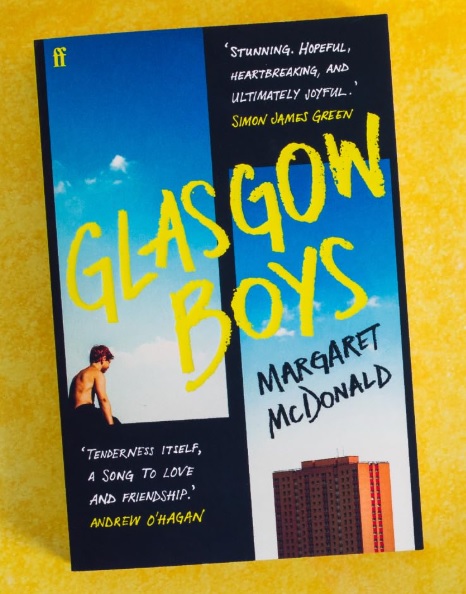
This summer, Glasgow Boys by Margaret McDonald (Faber), a novel about two boys emerging from the care system, won the Branford Boase Award for debut writers; it had already been announced as the winner of the Carnegie Medal award.
The Branford Boase Award recognises the role that editors have in shaping novels and here, editors Alice Swan and Ama Badu provide an extraordinary insight into editing Glasgow Boys.
Find out more about Glasgow Boys
Editors Alice Swan and Ama Badu: Discovering Glasgow Boys
Alice: There are many wonderful things about being an editor, but, for me, and I'm sure for others, the really special moments are when you come across a manuscript that you want to acquire. As editors we are always reading with a view to publication, and as a result, we say a polite 'no' to most of the scripts that drop into our inbox. As Faber's list is small and carefully curated, we are encouraged to be selective. When we do opt to bid for something, it has really stood out of the pile.
Looking back on the emails I sent when Margaret McDonald's Glasgow Boys arrived in my inbox, my excitement was palpable! Here is what I wrote to Margaret's agent, Rachel Petty: 'I have really fallen head over heels for this beautiful story. As you can imagine, it takes quite a lot for me to truly escape into something: I read so much, and my editorial brain feels like it never switches off, even when reading books for pleasure, and yet I fell into this so deeply, savouring every word, not wanting to miss a single sentence. I haven't enjoyed such a powerful reading experience in a long time, and I felt like I had been pulled right alongside Finlay and Banjo, that I was living their lives and feeling their yearning and their pain. To me, these two boys are REAL . . . '
When I come across writing as breathtaking as Margaret's, my job no longer feels like work! It becomes an exciting and unmissable discovery, and I'm afraid it brings out my most competitive side - I was desperate to publish Glasgow Boys. I had fallen in love and I couldn't bear the thought of it getting away
Ama: Each book has its own unique editorial process, which varies based on its stage at the point of acquisition and its subsequent needs. Working alongside Alice on Glasgow Boys was unlike any other book I've collaborated on.
As editors, we receive so many submissions and are constantly searching for the one that will keep us reading past the first few chapters. Glasgow Boys did just that; I was captivated until the very last page. I had to know that the boys would be okay, that they would learn to speak about the things that had remained unsaid for so long. I couldn't rest peacefully until I saw them heal and trusted that they could go on to thrive.
Needless to say, I was invested in those characters from the very beginning. So few stories linger with me for as long as Glasgow Boys has. It truly is a rare gem. It isn't often that we find stories like this, ones that remind us of our own humanity and show us the resilience we need in order to look ahead.
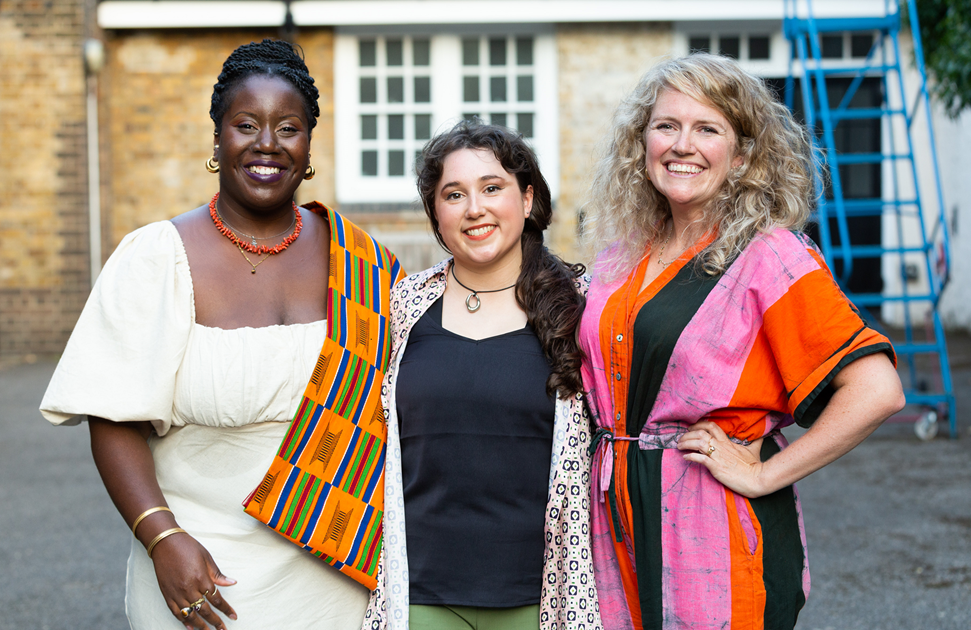
Glasgow Boy editors Ama Badu (left) and Alice Swan (right), with author Margaret MacDonald (centre)
Editing Glasgow Boys
Alice: Sometimes, when I am describing the editorial process, I am asked what happens if the author doesn't want to take in edits, etc., but it doesn't really work like that. We acquire books in an outpouring of love for what an author has written, so hopefully this results in an immediate foundation of trust and understanding. Especially if a book is sold at auction: the author is able to choose the editor who best understands them and their story. With Glasgow Boys, I was so invested in the two characters, Banjo and Finlay, that I just wanted to know them on a deeper level, and to do their story justice.
Editorial work should always be a conversation between the writer and their editor/s, and Margaret, myself and my colleague, Ama Badu, had many conversations about the book and how the structure might be tweaked in order to tell the most compelling story. I think Ama and I were both especially careful with this particular story, a story about two young men leaving the care system. It felt vitally important to get it right - not to sensationalise their experiences, or to exploit their stories for entertainment, but to give them the dignity, space and voice they deserve.
Ama: It isn't uncommon for the first draft to look quite different from the one we take to press. In this case, we were working with something that was already in great shape. We then had to think about how to position each scene to ensure that the reveals and accompanying feelings were placed perfectly. We knew the images of Banjo and Finlay's past were key to understanding them and the context they brought to their present lives. We had to consider where to nestle these moments so that they integrated with their current reality, mimicking the way buried memories resurface after being triggered. Once this was done, what remained was polishing and stripping away anything that was no longer essential.
It takes an incredible amount of trust between author and editor to do this work. As editors, we come to a text with fresh eyes. We don't know the history of the manuscript or the characters as intimately as the author does. We're often looking at something that has gone through years of dedicated work. It is precious to the author, and understandably they are protective over it. So being able to lean on an editor's expertise requires a great deal of trust and a shared vision.
It is our role as editors to take care in how we handle this precious manuscript. At the end of the day, we only want what's best for the author and their story. This can only be achieved through collaboration. We query things, ask questions and diligently seek out the author's intention with a particular scene, character or plot device to ensure that intention is honoured.
With Glasgow Boys we had to be delicate. The themes carry such weight and emotions with them. They needed space to be explored sensitively. We wanted both our characters and readers to be left with hope. We have very little control over what will resonate most with readers and what they will take with them. All we can do is work meticulously to ensure readers gain more from the reading journey than they started with.
Publishing Glasgow Boys
Alice: So much about Glasgow Boys makes me proud that Faber is its publisher: the representation of the working class; the depiction of poverty; the inclusion of the Scots language; the vital questions it raises about what it would feel like to reach eighteen and have your support network fall away as you leave the care system; the celebration of queer characters and their romantic love; the highs and lows of living with a disability; the intense pressures of training in the NHS . . . it is a story with so much at its heart, and Margaret tells it in such an uplifting and hopeful way - it really restores your faith in humanity!
In truth, the editorial journey of this book was as smooth and harmonious as I would hope it could be. I think the secret with this book was that its two characters did genuinely feel perfectly formed from the beginning, and as a result we approached the telling of their story with kindness and respect, as if they had been real.
Ama: This is one of the books I wish I could place into the hands of every young person. In fact, it's a book that every adult should read too. Regardless of where our story begins, we can change where it ends. Banjo and Finlay remind us that we can indeed carve out our own special place in the world. No matter how overwhelming or maddening our reality may seem at this moment, we are not beyond hope.