Children in England do well in PIRLS global literacy study
Posted on Tuesday, May 16, 2023
Category: News
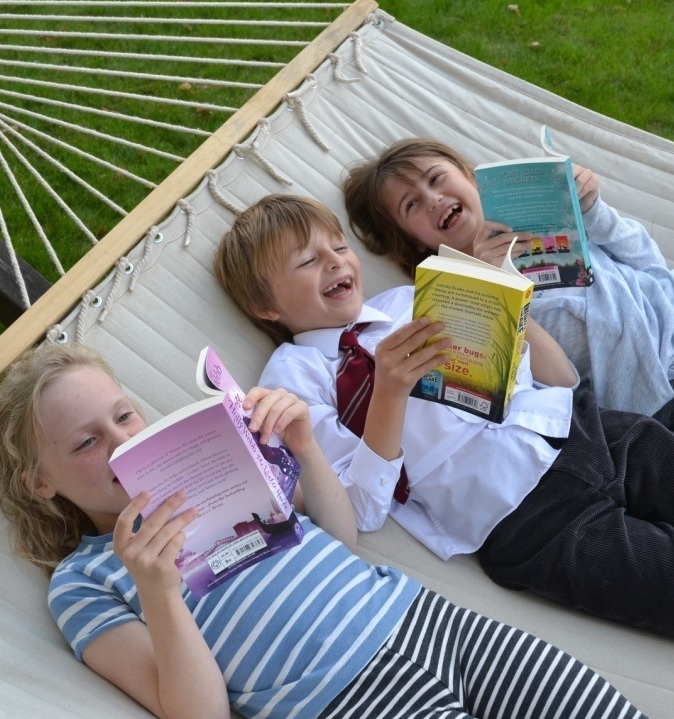
Children's reading skills in England have held steady, despite a global dip in reading achievement reported in the latest PIRLS study (Progress in International Reading Literacy Study).
However, the report also shows that reading for pleasure continues to decline among English children. Internationally, 42% of pupils said that they enjoy reading; this compares to just 29% of pupils in England who enjoy reading; those who said they did like reading scored an average of 34 points higher in PIRLS 2021 than those who do not like reading.
The PIRLS report compares the reading performance of nine and 10 year olds globally. A total of 57 countries and 400,000 students took part in PIRLS 2021.
Children in England came fourth in the international literacy study, up from joint eighth place when assessments were last carried out in 2016. English pupils are now ahead of countries like Finland and Poland in the rankings. Pupils in Singapore got the best results, followed by Hong Kong in second place and Russia in third.
PIRLS uses a literacy test and pupil and school questionnaires to assess three different aspects of reading literacy, including how pupils read different types of texts, what reading comprehension processes pupils use to understand those texts, and what attitudes pupils have towards reading.
The report's results reflect the global affect the pandemic has had on children's reading, showing declines in reading achievement in 21 of the 32 countries that had comparable trend data between 2016 and 2021. A further eight countries, including the UK, saw no change, and three reported higher achievement. According to their parents, staying home from school adversely affected learning for two-thirds of the students.
PIRLS results for England
English pupils' reading skills remain stable, despite the pandemic
While most other countries saw significant drops in overall performance since 2016, much of their data was collected during the COVID-19 pandemic. In England, the assessment of schools was delayed by a year, to 2021.
England's average score in PIRLS 2021 was 558; Singapore in top spot achieved an average score of 587, Hong Kong came next with 573, and Russia scored 567.
England's score is higher than the International Median score of 520, but similar to its previous PIRLS reports. After a decline in performance between 2001 and 2006, average achievement increased steadily until 2016. Between 2016 and 2021, the average reading achievement of Year 5 pupils in England has remained stable - although this is still something of an achievement, given the backdrop of the pandemic.
97% of pupils reach the Low International Benchmark
PIRLS uses four International Benchmarks (Low, Intermediate, High and Advanced) to describe the reading skills associated with PIRLS scores. Almost all pupils in England (97%) reached at least the Low International Benchmark, compared to an International Median of 94%, while 86% of pupils in England reached the Intermediate Benchmark level compared to an International Median of 75%.
More than half of pupils in England (57%) reached the High International Benchmark in PIRLS 2021, compared to an International Median of 36% reaching this Benchmark, and 18% of pupils in England reached the Advanced International Benchmark, compared to the International Median of 7%.
Gender gap in reading narrows
In England, the gender gap in reading performance has narrowed over time. Girls still outperform boys by 10 points on average in PIRLS 2021, but this is down from the 15-point difference in 2016. In PIRLS 2011, England had one of the largest gender gaps and the largest gap of any participating European education system, but the gap narrowed in 2016 and in 2021. However, in 2021 the narrowing of the gap reflects a decrease of 4 points in the average achievement of girls and a 2-point improvement in boys' scores.
Attainment gap improves
The gap between the lowest-scoring and highest-scoring pupils in England has also reduced over time, as performance amongst the lowest-attainers has improved, while high attainers' average score has remained relatively stable.
Decline in reading for pleasure
Despite the success in reading performance, fewer pupils in England reported that they enjoy reading than in previous cycles with more boys saying they do not like reading compared to girls; however, both boys and girls report similar levels of confidence in reading.
Predictors of PIRLS performance in England
The strongest predictor of PIRLS performance was the Year 1 phonics check mark, for which a 1-point increase was associated with nearly a 4-point gain in PIRLS 2021 overall reading performance.
The number of books at home was the second most powerful predictor of overall reading score, with higher numbers of books associated with higher PIRLS scores; pupils who reported having over 200 books at home scored approximately 56 points higher in PIRLS than those who reported having 10 or fewer books at home.
Eligibility for FSM within the last 6 years was a strong negative predictor of PIRLS achievement. FSM-eligible pupils scored about 23 points lower than their peers who were not FSM eligible, after accounting for other pupil characteristics and school attainment band.
Being in a mid-high or high performing school, being in the 'Mixed' ethnic group and being born earlier within the school year were also significant positive predictors of PIRLS scores. After accounting for all other variables mentioned above, gender and English as an Additional Language (EAL) did not significantly predict PIRLS score.
Declining levels of reading for enjoyment
Pupils that participated in PIRLS 2021 complete both the reading assessment as well as a questionnaire that asks about their attitudes towards reading. Findings from PIRLS 2021 internationally show that pupils who enjoy reading have higher average reading achievement.
Internationally 42% of pupils said that they enjoy reading but England does poorly here, with 29% of pupils in England saying they enjoy reading, which is lower than previously. Confidence in reading has one of the strongest associations with reading achievement in PIRLS. In 2016, just over half (53%) of pupils in England felt very confident in reading, this has decreased in 2021 to 45%.
More girls than boys said they enjoy reading (32% to 25%), although a similar proportion of girls (46%) and boys (44%) report feeling confident in reading. The proportion of pupils with more books at home also showed higher levels of confidence in reading, while pupils who had been eligible for FSM in the past 6 years were less likely to be very confident.
Global Trends in Reading Skills
Global responses showed that most children attend schools with positive environments, although home environments and schools' socioeconomic status remain strong indicators of achievement.
Home support has a substantial impact on reading achievement
Students had higher reading achievement, on average, when they had higher home socioeconomic status (SES), their parents often engaged them in early literacy activities, and they could do early literacy tasks very well when they began school. Parents' enjoyment of reading was associated with their children's higher reading achievement. However, more than two-thirds of the students had parents who only “somewhat like” or “do not like” to read.
Affluent schools with few discipline issues do better
The report suggests that most students are in supportive school environments. However, students attending schools with a more affluent student body with good resources and few discipline or safety problems had higher average reading achievement at the fourth grade. A higher degree of emphasis on academic achievement also was associated with higher reading achievement.
Enjoyment of reading affects attainment
Students with positive attitudes to their reading skills had higher average reading skills. Students' reading enjoyment was also associated with higher average achievement, however, the majority only "somewhat" or "do not like" to read.
Gender attainment gap
The gender gap in reading achievement favouring girls persisted in PIRLS 2021, according to the research. Girls had higher reading achievement than boys in 51 of the 57 PIRLS 2021 countries, with an average difference of 19 points.
A full report on the UK Results can be downloaded from the Department for Education website
The Progress in International Reading Literacy Study (PIRLS) is an international comparative study directed by the International Association for the Evaluation of Educational Achievement (IEA). The 2021 assessment (released in 2023) was directed by Drs. Ina V.S. Mullis and Matthias von Davier at IEA's TIMSS & PIRLS International Study Center at Boston College.