Inclusive Books for Children 2025 report highlights 'catastrophic decline' in Black representation
Posted on Thursday, October 9, 2025
Category: News
A new report from Inclusive Books for Children highlights a 'catastrophic decline' in Black representation in children's books. The 2025 Excluded Voices report found that only 5.9% of books published in the UK in the last three years featured marginalised main characters, and only half of those were created by authors or illustrators from those groups.
The report takes a close look at children's books published in the UK for ages one to nine in the last three years, including 2024. The analyses of Own Voice, main character representation of marginalised groups in UK children's books revealed 'vast gaps' in meaningful representation, said its authors, particularly a steep decline in Black representation which was masked by an increase in the number of books with Asian main characters.
Some of the report's main findings include:
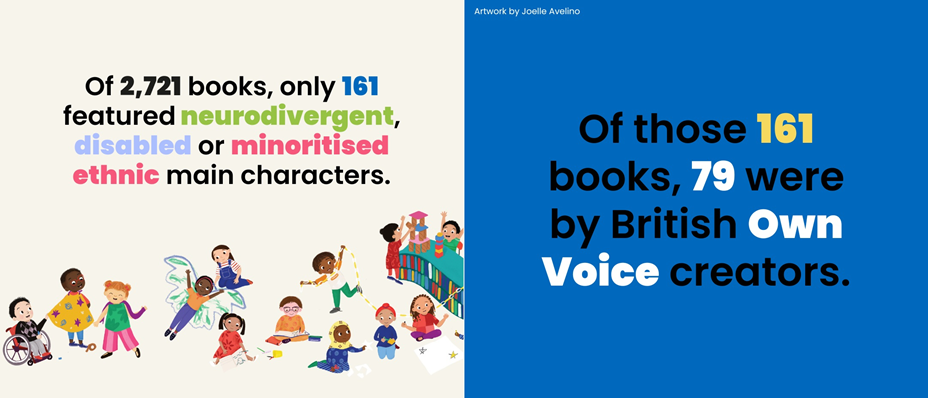
- Of the 2,721 titles surveyed, just 5.9% had a neurodivergent, disabled or minoritised ethnic main character, and fewer than half of those were written by British Own Voice creators.
- Books with Black main characters fell by 21.5% compared with the previous year, 2023
- 56 books (2.1%) featured Asian main characters, when 15.1% of the English nursery and primary school population have Asian heritage
- 1.3% of book main characters were of South Asian heritage, compared with around 12.5% of pupils in England's nursery and primary schools
- East and Southeast Asian (ESEA) representation was also lacking, with only 0.8% of books featuring ESEA protagonists, despite approximately 2.6% of young pupils being of ESEA heritage
- Only seven books featured disabled main characters (most were created by non-disabled authors or illustrators), and six featured neurodivergent main characters
- Just 2.8% of books for babies and toddlers featured marginalised main characters and only two of 577 baby and toddler books included an Own Voice main character.
'Missed opportunity'
The report's authors highlighted a 'huge missed opportunity' to show children, through high-quality, authentic storytelling, that everybody belongs and everybody adds value to society, at a time when Far right agitators are threatening the peace and security of people from minoritised ethnicities. "This underlines how essential it is that creatives with marginalised identities be brought into the fold of children's publishing," the authors commented.
Sarah Satha, co-founder of Inclusive Books for Children, said, "Why do these findings matter so much? For one, we face a reading for pleasure crisis, and the narrow range of books hogging shelves is clearly not doing a good job of enticing a wider range of potential booklovers."
She added, "It's also not enough to plug the gap with non-Own Voice stories. This type of representation is superficial, and the reader can sense it." More than half of main characters with marginalised identities were created by author-illustrator teams with no lived experience of said identity, Satha said. "That's really concerning."