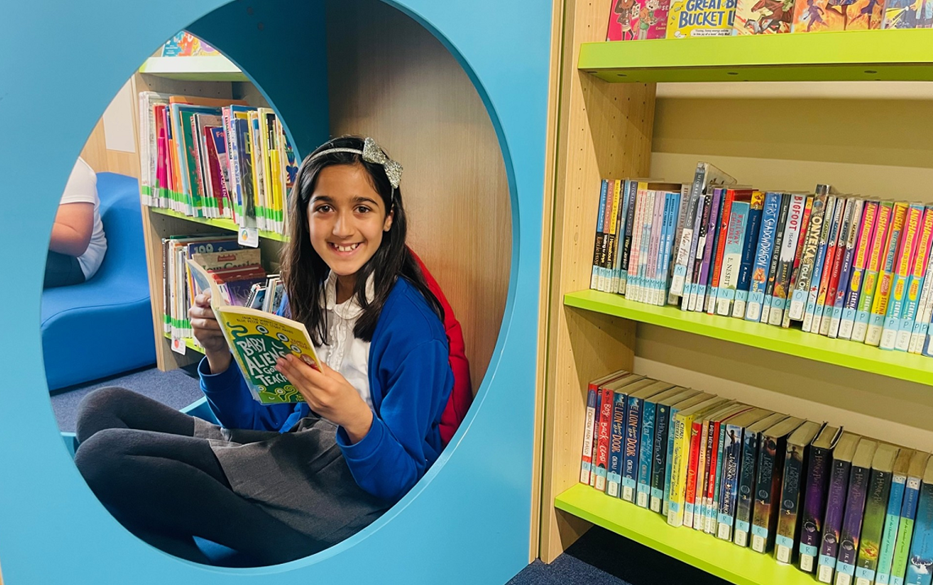
Primary School Library of the Year 2025
Posted on Tuesday, November 25, 2025
Category: Meet A School Librarian
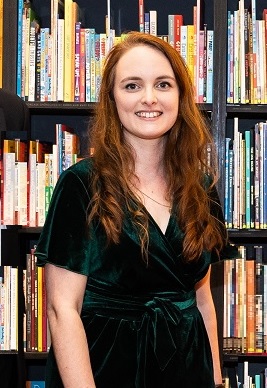
Verity Robinson is an experienced primary librarian. Led by Verity, Mangotsfield C of E Primary School Library recently won the Peter Usborne Primary School Library of the Year 2025, awarded by the School Library Association. Here, Verity tells ReadingZone about her library and what makes it stand out.
Verity is also an illustrator and has created a website called The Illustrated Library full of downloadable resources supporting schools to celebrate reading and libraries.
Find out more about the SLA's Peter Usborne Primary School Library of the Year Award and find out how to nominate your own primary school library for the Peter Usborne Primary School library of the Year Award (deadline 9am, 16th February '26)
Q&A with Verity Robinson, introducing Mangotsfield C of E Primary School Library
"Fostering a love of reading doesn't happen overnight. Building a culture of reading for pleasure is a
long-term commitment and requires a whole community to get on board!"
1. Congratulations on your school's award! Can you start by telling us about Mangotsfield's school library and its context; how does it serve specific needs in your school, any special features?
Thank you so much! Our library is very much the heart of our school. It's a small space just off the main corridor, so all the children, staff and visitors walk past it every day. In early 2017, our PTA funded the furniture so the space looks modern and welcoming. However, after the pandemic, the space had become home to interventions and 'regulation stations' so wasn't being used as a library at all.
I was hired in April 2023 as part of the school's action plan to reintroduce the library back into school life. Since then, we've established dedicated, timetabled library lessons for every class and refreshed the collection of books to inspire and engage all of our readers.
2. The library was recently renovated - how was this organised and funds raised for it? What was the priority?
Although the PTA funded the library furniture some time ago, our focus over the last few years has been ensuring we have high-quality, up-to-date texts for every child to enjoy. The school recognises how transformative access to great books can be, so we were fortunate to secure part of the school budget to help rebuild the collection.
To make the funds go further, we've also had generous support from the PTA, donations from our English Hub, we've hosted book fairs, second-hand book sales and I enter every book giveaway competition I can! We also set up a 'Birthday Books' project, inviting pupils to donate a book on their birthday. Each donated book includes a special bookplate celebrating the child who gifted it. Additionally, we set up an online wish list with independent bookshop, Storysmith, where the families can choose which books to donate. We're incredibly grateful to have such a supportive community of readers in our school!
When planning the reopening, our top priority was pupil voice. We began by asking the children what they wanted from their library, which books they hoped to see, and learnt more about their reading habits. Surveys and suggestion boxes gave them a meaningful role in shaping the space and helped build excitement for the reopening. By the time the library doors opened again, the children already felt a strong sense of ownership and loved spotting the books they had personally recommended.
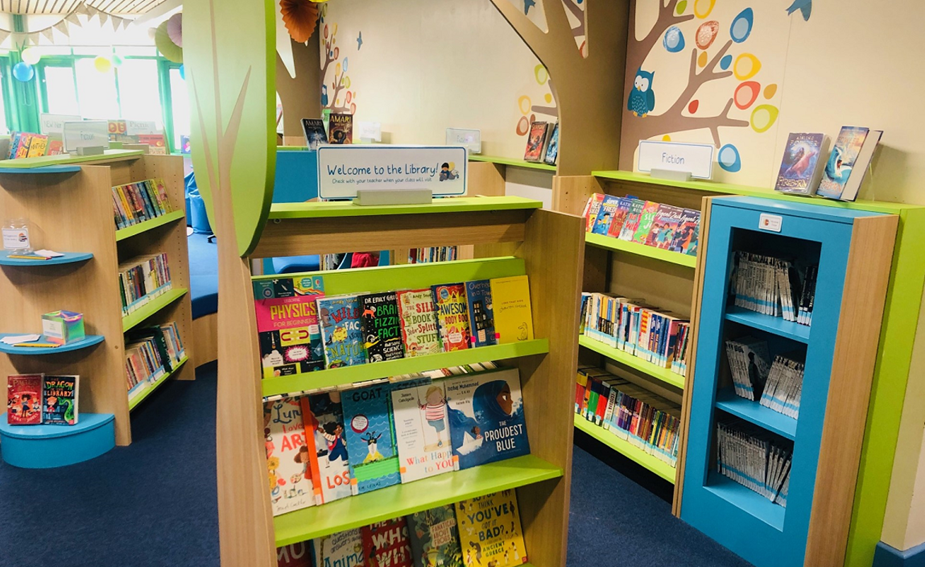
3. How would you describe Mangotsfield's library now and how the pupils view it?
The library is now a huge part of the culture in the school, and the children look forward to their visits. Many call it their favourite place in the school and find it a relaxing environment where they can take agency over their book choices without fear of judgment or tests - it's all about reading for pleasure!
4. What are your school's priorities for the library? What is the school's approach to reading for pleasure, and how is the library used to support this?
Some of our key priorities are making sure that every child feels welcomed and can have the opportunity to fall in love with reading, as we know what an impact this can make to not only their academic success but also their overall wellbeing. We believe that every child should have the opportunity to see themselves and their lives reflected in the stories they read, and we know that children are far more likely to choose a book when they can identify with the characters or experiences within it.
The library is a key component to our reading for pleasure culture and plays an active role in nurturing that love of reading across the school. We make sure each class has dedicated library time built into their timetable but there are also opportunities outside of this such as classroom book corners, library break and lunch clubs, and our outdoor Reading Sheds, where children can explore reading in different ways.
Throughout the year we celebrate reading with our whole-trust Literature Festival, author visits and competitions so our learners can have lots of opportunities to experience new authors and talk about books with their peers and teachers.
We also make sure that we have a diverse collection of books - including a vast array of text types but also making sure that we have books from a diverse range of authors featuring characters from different cultures, races, religions, who have different types of families or disabilities, too. By creating a library space that feels inclusive, exciting, and connected to the wider life of the school, we ensure that the library is not just a room full of books, but a vibrant hub that supports every child's journey as a reader.
5. How do you engage children who are less enthusiastic readers, or who struggle with reading?
Having a really diverse range of books to choose from is the first step in engaging any child with reading. For many less enthusiastic readers, the barrier is simply that they haven't yet found the right book. Our library offers a wide collection of fiction, non-fiction, graphic novels, picture books and poetry for our learners to pick from and I'll always start by asking children what they're interested in - whether it be sports, arts, a really niche moment in history or a particular animal they saw on a David Attenborough documentary. Whatever they're passionate about, I'll always try to find a book to match!
For those who particularly struggle with reading, we have a collection of Barrington Stoke's dyslexia-friendly titles which I promote to all our readers. We call them ‘Super Readable' books and they've been popular with all learners. They're shorter and highly illustrated, which helps build confidence, but they still offer the sense of achievement that comes from finishing a whole chapter book. Graphic novels have also been a brilliant tool to engage struggling readers. The illustrations support comprehension and the demand for them is so high that the graphic novel shelf is rarely full - they're some of the most loved books in the library!
6. How is the library used to support teachers and teaching across the curriculum?
Our library lessons are timetabled into curriculum time and are seen as an important part of our reading offer in school. I work with our English Hub and have regular meetings with our Reading Lead and SLT to make sure that the library is seen as valued and is providing the best service for our children.
With my in-depth knowledge and passion for brilliant children's books, I'm often asked to help select books to assist teaching and learning beyond the library such as books for our reading curriculum, books to support different children's needs or books which fit in with yearly events such as Remembrance Day or Empathy Day.
7. What do you have planned next for your library's development - and for the National Year of Reading next year?
I'm so excited that there's going to be a huge focus around reading with 2026 being the official 'National Year of Reading'! We're part of a family of 17 primary schools in the Leaf Trust, and alongside working as the librarian in Mangotsfield CofE Primary, I coordinate our annual 'Leaf Literature Festival' - a celebration of reading and community. During the festival, all schools participate in a range of author/illustrator events, activities and competitions. I'm excited to hear more about the plans for the National Year of Reading and hope we can incorporate these into our festival plans so all our schools can celebrate together! As for the library, I just hope that every year I can inspire more and more children to find a genuine love of reading.
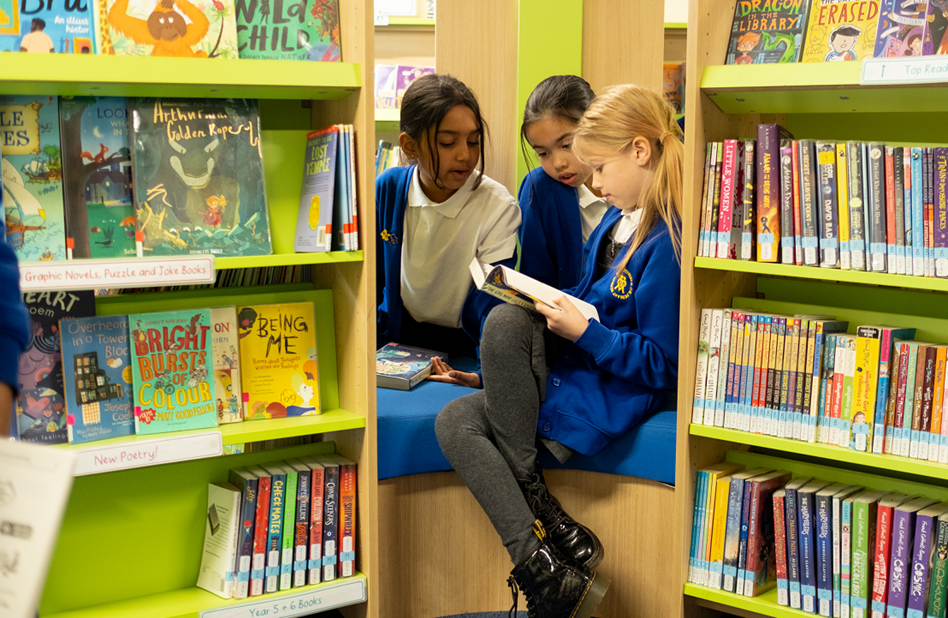
8. Can you share three simple things you have tried out that you'd recommend to other librarians?
- Ask the children what they want! Collecting pupil voice, creating surveys and setting up recommendation boxes are something I do throughout the school year and the ideas continuously inspire and surprise me! This not only helps us stock books that reflect their interests but also gives them a sense of ownership and excitement about the space.
- Form strong relationships with your colleagues. Being a librarian can, at times, be a lonely job when you're the only one in the school making decisions for such a key part of school life. Building strong relationships with the teachers and support staff is key to the library's success, and I'm so grateful for the support my colleagues have given me. I recommend offering to collaborate with teachers by suggestions books for class topics, supporting cross-curricular projects, and sending out regular reminders of what's going on in the library too. Engaging teachers in this way turns them into enthusiastic partners in promoting reading. When teachers model and celebrate reading themselves, it has a huge positive impact on pupils' engagement.
- Engaging with families. Not every family will understand the importance of the school library but the more the children are engaged, the more the families will be, too. One approach is to open up the library to families so that parents and carers can explore books alongside their children. If this isn't possible, another strategy I'd recommend is to keep families informed through your school's newsletters and social media. Invite them to participate in reading challenges with their children and share what you've been up to in the library so they are more invested in the impact. By creating these opportunities, families become active partners in nurturing a love of reading, and children see that reading is valued both at school and at home.
It's important to remember that fostering a love of reading doesn't happen overnight. Building a culture of reading for pleasure is a long-term commitment and requires a whole community to get on board! Even small, consistent steps, like celebrating reading achievements or sharing new recommendations, gradually build excitement and a genuine love of reading across the school. Patience and persistence are key!
9. What's the one thing you do that has the most impact, and how do you know?
The one thing I do that has the most impact is getting to know each pupil as an individual reader. With over 600 children in our school, I make a conscious effort to learn about their interests, reading habits and favourite genres so I'm able to tailor recommendations that genuinely engage them and help them feel welcomed in the library.
This personal approach has had a real impact as we've seen an increase in the variety of books which are being borrowed, teachers have commented on how I support pupil's reading choices, and they have also noticed more reading conversations happening across the school. Since I started at the school, our learners are increasingly excited to share what they've been reading with me and it's one of my favourite parts of the job!