Uplift in reading for pleasure among older children hides falls elsewhere
Posted on Thursday, June 15, 2023
Category: News
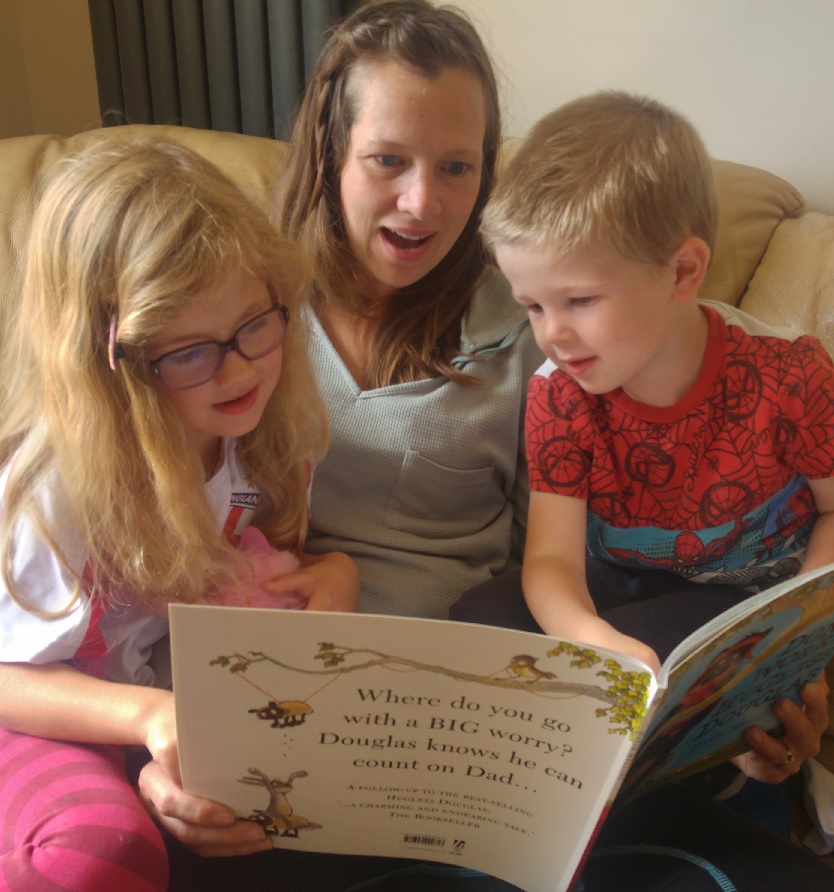
An annual report into children's reading for pleasure has found that more children aged 8-13 years read every day, or nearly every day, in 2022 compared with 2021. However, when all children aged 0-17 years is considered, nearly half (47%) don't read every day, or read infrequently; a decade ago in 2012, that figure was 32%.
The research, Children's Reading for Pleasure: Progress, Problems and Practical Solutions by Farshore and its parent HarperCollins Children's Books, aims to help identify the barriers and the enablers to children's reading for pleasure.
While the proportion of 8-10-year-olds and 11-13-year-olds reading 'every day or nearly every day' in 2022 has grown, fewer 5-7s and 14-17s are reading frequently, meaning that there was no overall growth in children aged 0-17 reading for pleasure between 2021 and 2022.
And although one quarter of 0-17s read 'every day or nearly every day' for pleasure (that is, not for schoolwork), there has been a steady decline in children reading for pleasure since 2012 when this figure was 38%. Among all ages, boys read for enjoyment significantly less than girls do.
As the report concludes, 'There is a serious problem around reading for pleasure, notwithstanding the increases in reading 'every day or nearly every day' among 8-11s to 35% in 2022. Even with the increase, just over one third read for enjoyment on 4+ days per week. This means, quite obviously, that around two thirds read less than that or not at all.'
Who buys children's books?
A large proportion of books are bought for children who are already engaged readers. A fifth of children reportedly received 21 or more books, while around half of children received between one and 10 books in 2021.
What would encourage children to read more?
"Our research has consistently shown that children are enthused and motivated by being read to."
Farshore's research shows that despite the positive growth in reading among 8-13s, the percentage of children who are regular readers is small. Key to encourage children to read is reading aloud to children, both at home and in school, says the publisher. "Our research has consistently shown that children are enthused and motivated by being read to throughout childhood." This includes reading to children well beyond the point at which they are capable of reading independently.
While many children think of reading as 'homework', the publisher says, "Reading aloud to them shows children that reading is a delight and something they can enjoy. Reading aloud changes the atmosphere around reading." However, not enough parents read regularly to their child, and since 2012 the incidence of reading to children is down a lot. Fewer than half of 5-7s and a quarter of 8-10s are now read to 'every day or nearly every day'.
One possible factor behind the improvements seen in reading for pleasure, then, could be the result of what is happening with reading in schools as they respond to the Department for Education's 2021 'Reading Framework', which focuses more on reading for pleasure, and to Ofsted looking for evidence of reading aloud to children. Encouraging reading for pleasure in the school environment requires something different from the conventional approach of delivering a subject lesson and different, exciting and creative strategies are being developed in the school environment.
Reading for pleasure among specific age groups
Among 5-7s:
'Fewer than half of 5-7-year-olds are read to 'every day or nearly every day' at home (46%).'
Decline year on year: In 2022, 32% of 5-7s read 'every day or nearly every day', down from 38% the year before and 54% in 2012. The decline was steeper among boys than girls.
This is the age when children are learning to read and, as the report states, it can be difficult. "Reading lessons and homework can put children off, so being read to for enjoyment matters; it shows children reading can be fun."
The report also highlights that 33% of boys and 24% of girls spend 5-11+ hours a day on screens on a non-school day. "A large proportion don't have the attention span for reading books: 49% of boys and 33% of girls." This jumped for boys year on year, up from 38% in 2021. For girls, the increase was up from 31%.
Among 8-10s:
'76% of boys and 65% of girls would rather watch TV, play video games or go online than read books'
Growth year on year. In 2022 42% read 'every day or nearly every day', a significant increase from 34% in 2021, and particularly among girls with 46% of girls reading consistently, compared with 37% of boys.
"This is the age when children are becoming more competent, and most will be capable of reading alone. Many parents think of reading simply as a skill, so that once their child has mastered it little further attention is required."
Many parents stop reading to their child at this age; only 25% are read to 'every day or nearly every day' at home, and 43% are infrequently or never read to. This is also when the pull of social media and screen-based entertainment intensifies: 76% of boys and 65% of girls would rather watch TV, play video games or go online than read books
Among 11-13s:
'On a non-school day, 46% use screens for 5 -11+ hours a day.'
Growth year on year. In 2022, 28% read 'every day or nearly every day', up from 24% in 2021, with a similar rate of growth among boys and girls although girls read more; In 2022, the 28% average comprised boys 24%/ girls 32%.
At 11-13, more boys than girls 'rarely or never' read, including 17% of boys and 12% of girls. In these early secondary school years, just 10% of children are read to ‘every day or nearly every day' at home, and 75% are infrequently or never read to. On a non-school day, 46% use screens for 5 -11+ hours a day.
Among 14-17s:
'Just a quarter (25%) of readers of YA fiction in 2022 were aged 13-17 years; most YA readers are over 18 years.'
Decline year on year. In 2022, 9% of teenagers read 'every day or nearly every day', down from 15% in 2021. The decline was steeper among boys than girls, with 5% of boys and 14% of girls reading regularly. The 27% of 14-17s who say they 'rarely or never' read comprises 34% of boys and 19% of girls.
Just over half of this group pointed to homework as the reason for not reading for enjoyment - there just wasn't the time - while, predictably, most say they would rather watch TV, play video games or go online than read books (81% of boys and 73% of girls).
14-17s are the only age group who were reportedly bought fewer books as gifts in 2022 vs 2021. Nielsen's Books and Consumers 2022 report shows just a quarter (25%) of readers of YA fiction were aged 13-17 years; most YA readers are over 18 years, with 42% aged from 18-27 years.
What lies behind the figures?
'Children who are read to often are much more likely to read themselves on a daily basis.'
Farshore has put considerable research and effort into understanding children's reading, both at home and in school. Its research with families shows, time and again, that the more often children are read to, the more likely they are to regularly read themselves, and vice versa.
Children who are read to often are much more likely to read themselves on a daily basis - almost a half of 5-7s and almost three quarters of 8-13s who are read to daily go on to read daily themselves. Indeed the two age groups that showed growth in reading for pleasure year-on-year, 8-10 and 11-13, did benefit from being read to more often at home over that time:
Decline in Reading among 5-7s
'There was a striking increase in not having the attention span for reading books… and in them spending 5-6 hours a day on all types of screens.'
Despite the correlation between being read to and going on to read themselves, 5-7s who showed a decline in reading were also read to more often at home in this period, so other factors are at play, particularly among boys in this age range.
The research points to a striking increase in not having the attention span for reading books (up from 38% in 2021 to 49% in 2022); and in not finding reading easy (up from 35% in 2021 to 45% in 2022); to children spending 5-6 hours a day on all types of screens on a non-school day (up from 13% in 2021 to 18% in 2022).
Since 2012 the overall incidence of reading to children 0-7 is also down significantly, while at pre-school age, boys are much less likely to be read to than girls. Some parents in focus groups believe that boys are less interested in books and reading than girls.
Awareness of the importance of Reading for pleasure
While there is high awareness among publishers, educators and charities that reading for pleasure is a key to children's attainment and wellbeing, many parents remain unaware of this, or that reading aloud to children encourages them to choose to read for pleasure themselves. Among parents of 0-13s, over one quarter (27%) said they were not very aware or had no idea that children who read for pleasure do better in life, or that reading aloud encourages children as readers.
The implications of not reading aloud to children
Not enough parents read regularly to their child, and since 2012 the incidence of reading to children 0-7 is down significantly. There are serious implications arising from low levels of reading to pre-schoolers, including reduced language development, poor vocabulary and slower language development; at five years old, a child's language is the single most important factor in predicting literacy at the age of 11. As children get older, they are less enthusiastic about reading as it not a significant part of home life. In particular, many boys start school at a disadvantage because they are read to less often than pre-school girls, and because dads often don't read with children.
"Significant proportions of both girls and boys miss out on being read to by their dads but, for boys, the lack of a male reading role model has a profound impact on their own interest in and motivation to read for pleasure."
Farshore and Harpercollins have, as a result, launched a new campaign, #DadsMakeStoriesMagic through Booktrust to encourage dads to read with their children every day; a role often filled by mums.
"Getting the attention of parents can be challenging. With something as fundamental as reading, we've found most parents already have their position on it. The opportunity is to show them a different way... With the support of our authors and celebrities, we hope to gain the attention of dads and father figures with a challenge and advice."
Data for this article includes information from Nielsen Bookdata's Understanding the Children’s Book Consumer 2022