Dr Nomisha Kurian explores AI developments in Think Big: Artificial Intelligence


About Author
The growth in Artificial Intelligence and questions about how it can shape our world are hugely relevant to today's young readers. ReadingZone spoke with author and educator Dr Nomisha Kurian about exploring AI for children in her new book, Think Big: Artificial Intelligence.
When she's not writing, Dr. Nomisha Kurian researches how AI can best support children's safety and wellbeing. She is an Assistant Professor at the University of Warwick and holds a PhD in Education from the University of Cambridge.
Interview
February 2026
Exploring current and future AI developments with Dr Nomisha Kurian, author of Think Big: Artificial Intelligence
The latest area to be explored in Nosy Crow's Think Big series is Artificial Intelligence, and ReadingZone caught up with specialist researcher and author Dr Nomisha Kurian to find out more about it.
As well as introducing children to the concept of AI, Think Big: Artificial Intelligence (Nosy Crow) also encourages readers to ask questions about AI and its likely future role in our world.
Q&A with Dr Nomisha Kurian
"The book encourages children to think both critically and hopefully about technology -
we want our readers to become thoughtful and responsible digital citizens."
1. Thank you for joining us on ReadingZone to talk about your book, Artificial Intelligence. Can you start by telling us about your background in science and AI, and how you got started?
I am an academic researcher who studies how children learn, grow, and make sense of the digital world around them. Over the past few years, my work has focused especially on artificial intelligence and what it means for childhood, education, and wellbeing. I became interested in AI when I realised that children are already interacting with intelligent technologies in their everyday lives, often without fully understanding how they work. That inspired me to create resources that explain AI in ways that are accurate, reassuring, and genuinely engaging for younger readers.
2. There are many misconceptions and fears about AI, is that also why you wanted to write about it for children?
Yes, very much so. Children often encounter dramatic headlines about robots taking over or machines replacing humans, which can feel confusing or even frightening. I wanted to create something that replaces fear with understanding. When children learn what AI actually is, how it is designed by people, and where it appears in their daily lives, they feel more confident and curious rather than worried. The goal is to help them feel empowered to make sense of AI and even feel inspired to help build responsible AI futures.
3. Is there one question that children always ask about AI - perhaps, "Can Artificial Intelligence do my homework?"
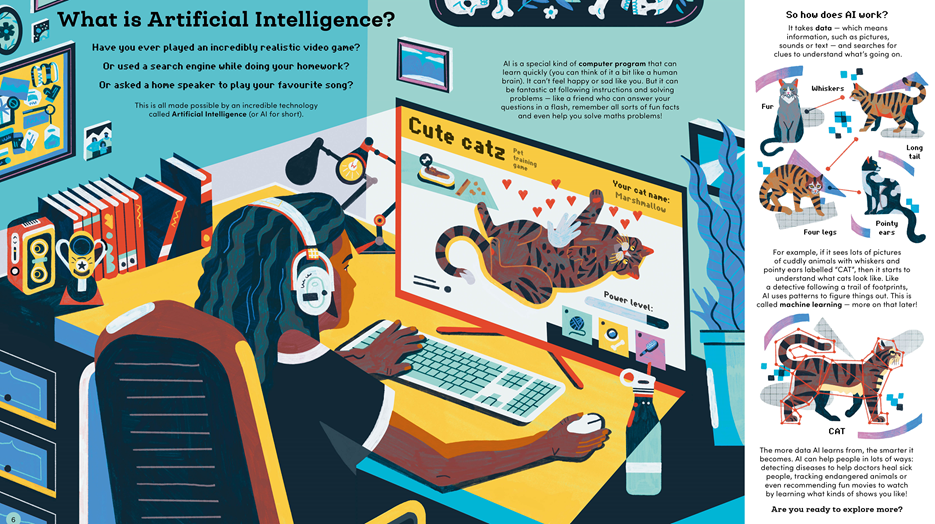
That question definitely comes up! I usually tell them that AI can help explain ideas or give examples, but it cannot replace their own thinking. Learning happens when children ask questions, try things out, and sometimes make mistakes. AI is best understood as a helpful tool, not a shortcut.
4. What other kinds of questions do you answer in University of Cambridge: Artificial Intelligence? What will readers find out about?
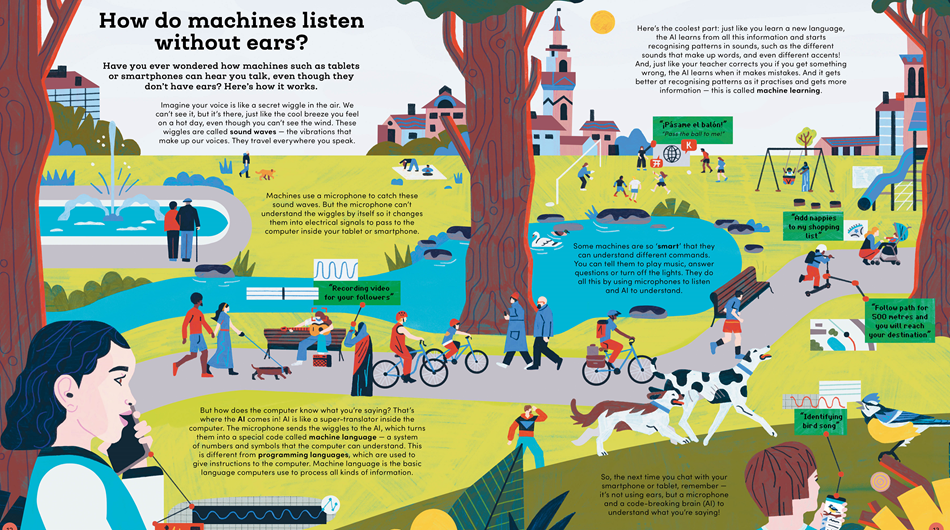
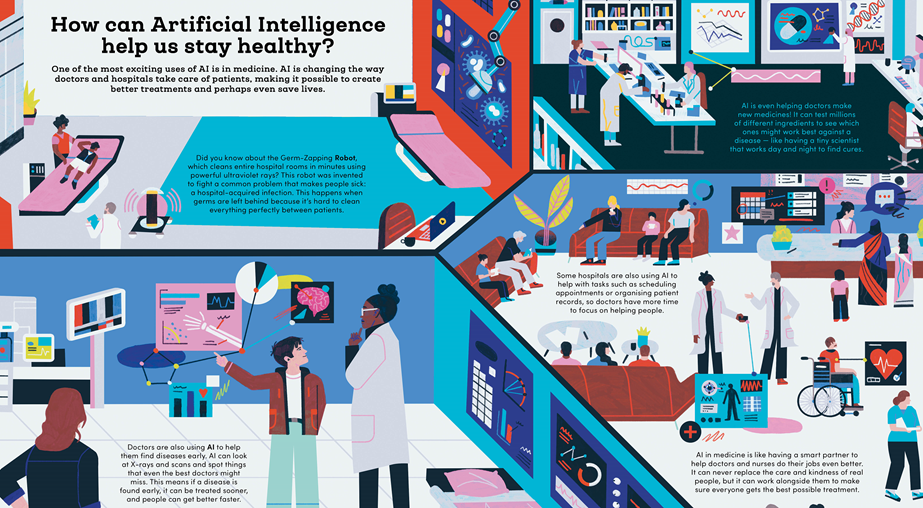
The book explores questions children naturally wonder about: How does AI learn? How can a machine listen without ears? Where do we see AI in everyday life? Can it be creative? Is it always fair? Readers discover that AI is already present in things like voice assistants, recommendations, and navigation apps and we also help children think about cutting-edge technologies like self-driving cars and medical uses of AI. Importantly, the book encourages children to think both critically and hopefully about technology - we want our readers to become thoughtful and responsible digital citizens.
5. Where did you go to research Artificial Intelligence for this book, and how is the University of Cambridge involved? Did anything surprise you when researching AI development?
The book draws on my last four years of researching the impact of AI on children, as well as conversations with scientists, educators, and technologists. The University of Cambridge is where I did my PhD in Education as well as my previous BA and MPhil and where I held two postdoctoral positions. I now enjoy the vibrant research environment at the University of Warwick where I am an Assistant Professor.
Many scholars at both universities are thinking carefully about the future of AI. What surprised me most is how quickly AI is evolving, particularly conversational forms of AI - this makes it all the more urgent that young people are supported to develop AI literacy. Children are not 'future' users of AI; they are growing up with it right now.
6. Of all the areas you explore in Artificial Intelligence, which one are you most looking forward to developing further?
I am particularly interested in helping children understand that AI reflects human choices. The values we build into technology matter enormously. Supporting children to ask thoughtful questions, such as whether AI is fair, safe, and helpful, is a core goal of this book and something I hope to keep developing in future work.
7. "Is Artificial Intelligence going to take over the world?" is one of the book's questions. Are you excited for the future of AI, or nervous about humans' ability to develop it in the best way?
I would say I am thoughtfully optimistic. AI has enormous potential to support learning, creativity, healthcare, and accessibility. At the same time, it must be designed responsibly. When educators, families, researchers, and young people themselves are all part of the conversation, we are far more likely to shape technology in ways that benefit society.
8. What are the big questions that still remain about AI and how it could shape our world?
Some of the biggest questions are about responsibility and ethics. How do we make sure AI treats people fairly? How do we protect privacy? How do we ensure technology supports human flourishing rather than replacing meaningful human connection? These questions go to the heart of what it means to be human.
9. Do you have any other books about science for children planned? What else does your day job involve?
Yes! I am continuing to create resources for children and families that help young readers engage confidently with complex ideas. Alongside writing, my day job involves conducting research on making AI safer for children, teaching university students, and working with organisations that are thinking about how to design technology safely and responsibly for children. It is a wonderful balance of scholarship, teaching, and real-world impact.
10. And what do you enjoy doing when you're away from your desk? Do you enjoy discovering new things about science in your everyday life?
Absolutely. Curiosity does not switch off when the workday ends! I enjoy noticing how technology appears in ordinary moments, whether it is something we use daily or simply observing how children ask imaginative questions about the world. I also love reading, spending time in nature, and exploring creative ideas, all of which tend to spark fresh inspiration.
 University of Cambridge: Think Big: Artificial Intelligence