Alex Cotter

About Author
Described as a love letter to Sheffield, Alex Cotter's new novel The Ice Dancer follows one girl's passion for ice skating - but what will it take to be a champion?
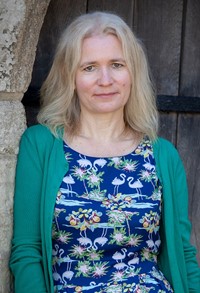
Alex Cotter has worked hard all her life at daydreaming, while making a living from words: from bookselling to copywriting and writing novels. She is also an Associate Lecturer in Creative Writing for Young People at Bath Spa University. As a fiction writer, her work has been nominated for the CILIP Carnegie Medal and selected for the Read for Empathy collection.
Raised in the North, Alex now lives near Bath with her family and one exceptionally chatty cat.
Interview
October 2025
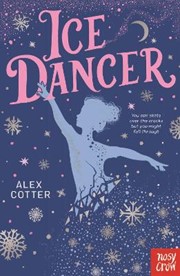
Alex Cotter explores the healing power of friendship and family in Ice Dancer (Nosy Crow)
Look out for family secrets, a mysterious saboteur and a fight to be a champion ice skater in Alex Cotter's new novel, Ice Dancer, set in contemporary Sheffield. Read a chapter from Ice Dancer
Dina skates to be free from the fragility and cracks in her own family life. When she is sent to stay with her aunt in Liverpool, she starts to skate in secret at an ice arena and enters a world of rivalry, threats and secrets.
You can also find a Creative Challenge from Alex, below, to use your own town or community as a setting for a novel; or to write about your own hobby or passion.
Review: "Ice Dancer is an excellent read, offering plenty of mystery and adventure, thoroughly enjoyable and thought-provoking!"
Q&A with Alex Cotter, introducing Ice Dancer
"I hope readers take away the thrill and adventure that can come with finding a passion in life
- whatever that may be, however small."
1. How did you become an author, and what kinds of books do you enjoy writing?
Reading turned me into a writer when I was at primary school. After university, I started working in the book world, and slowly, steadily began submitting my own writing to agents. I got published first with YA stories and now I write books for middle grade readers.
I love writing mysteries with lots of twists and turns, with a strong focus on resolving difficulties in families and friendships. While I tend to write contemporary stories, they always have a link to history, usually family history and local heritage, exploring how the past influences and affects our present-day lives.
2. What happens in your new book, Ice Dancer, and what gave you the initial inspiration for it?
It's about Dina who, as her home life cracks, turns to her dream of becoming a champion ice skater. Sent to stay with her frosty aunt in Sheffield, she starts skating in secret at an ice arena and discovers a world of competition, rivalry, and unexpected friendship. As she gets weighed down by family secrets and responsibility, she becomes embroiled in a game of skating sabotage, which she'll need to solve if she's ever to achieve her competition dreams.
I was inspired to write Ice Dancer by my own passion for ice skating as a child, which started when I moved to Sheffield, where the story is set - alongside a fascination for family stories!
3. How do you use your own passion for ice skating in developing your main character, Dina?
I loved ice skating as a child and teenager. I started skating soon after I moved to Sheffield, aged eight, when I was feeling homesick for my old home and friends and struggling with being the new girl in a class of strangers. Skating - and the dream of becoming a champion skater - helped me soar into another world and express myself freely.
I wanted to draw on this experience in the story (though Dina is a far better skater than I ever was!). I immersed myself back in the world of ice skating to explore that thrill of movement, leaping and turning. I wanted to show how skating helps Dina transcend her problems, to connect with her sister, and become a more confident version of herself.
As well as researching skating experiences and competitions for today's young people, I also went back in time to draw a backstory for Dina's great grandmother, as a champion skater in the 1930s.
4. Your stories often connect readers with characters who have a difficult home life. What draws you to exploring these issues, and what kinds of difficulties does Dina face in Ice Dancer?
I moved around a lot as a child - a lot of new homes and schools and trying (and often failing) to form new friendships while coping with losing old ones. Moving schools can place you on the periphery of life, which can mean you become more connected with other children who might also be having a difficult time or feel like they don't belong. I think that's why I'm naturally drawn to these kind of stories.
In Ice Dancer, Dina is trying to find her place at the ice rink after experiencing the loss of a loved one, along with her parents splitting up. She lacks confidence and feels isolated. By becoming a skating champion, she hopes to belong somewhere, to unravel her grief, and make her family whole again.
5. How do you use Dina's passion for skating to support the main themes in Ice Dancer?
Ice skating to me as a child was a form of escape. I wanted to instil that sense of freedom and exaltation skating can create, particularly when life gets darker. When Dina's world cracks and problems seem insurmountable, skating helps her to take back control and also connect with the loved one she's lost.
I also wanted to explore how Dina's dream to skate helps her to navigate tricky relationships, aligning the gruelling discipline and practice of skating with resolving friendship issues or secrets from the past.
6. What is your favourite moment in the novel?
I really love the ending because of the big choice Dina makes! Other favourites are the significant dream-making and reconciliation scenes that take place at a mystical site - the Peak District's Nine Ladies (though in the book they become six!).
7. Ice Dancer also reads as a love letter to Sheffield - why did you decide to set the novel there and how do you bring the city to life? What is your own favourite place in the city?
It is very much a love letter to Sheffield! I lived there for nine years, which is the longest I lived anywhere as a child. I grew up there in a time when there were problems in Sheffield, with the miners' strike and many of my friends' parents struggling to find work. But there was also such a strong community, of kindness and support - and fun!
I've been going back to visit so I can walk through my story settings and remember how places made me feel as a child. My favourite setting in the book is Endcliffe Park, which was near my house - I spent so much time there! And also the Bear Pit at the Botanical Gardens, where once upon a time a real bear was kept and expected to perform - a theme that links to the story.
8. Ice Dancer is an absorbing novel but, other than a great reading experience, what do you hope your readers might take away from Dina's story? What kinds of discussions do you think Ice Dancer could prompt?
I hope readers take away the thrill and adventure that can come with finding a passion in life - whatever that may be, however small. And how such a passion can give rise to a sense of belonging and confidence that might help if ever life becomes tricky. But I also hope it prompts discussion on relationships, and how we can misinterpret or expect too much from one another in ways that build walls.
I hope it shows the value of sharing family and community stories, and how our past and local heritage can lead to discussions around themes of loss and hope. I'd also like to stir debate on the nature of competition and winning, and how prizes can come in all sorts of guises, not just the trophy kind, as well as exploring some of the traditional roles in sport and whether they need to change.
9. For readers who enjoy Ice Dancer, which of your other books might they also enjoy? where do you do your best writing, and what are you writing currently?
I think Ice Dancer connects with The House on the Edge in that it's about finding a place where you belong, and recognising the value of friendship. But it also links to The Mermaid Call, with the main character's drive to be seen to be brilliant in order to fix a lack of confidence in herself.
10. Do you still skate? What are your favourite autumn and winter activities when you're away from your desk?
I do still skate, but not regularly, and not brilliantly! Though I still love that soaring feeling you get as you race around the ice (alas, my jumping days are over!). Now, I like to soar fast by going cycling in autumn. And if it snows in winter, bring on the sledging!
Creative Challenge: Encourage children to write about their own town or community, or their hobby
1. To encourage children to think about their own town or community as a setting for a novel:
Grab an A3 piece of paper. Now select three real places that might link to your own family history or your community's history that you can use for a story. For instance Dina's three are:
1. The Ice Arena - because that's where Dina's mum used to skate many years ago
2. The Botanical Gardens - because that's where a bear was made to perform in the Bear Pit in Victorian times
3. A 'Women of Steel' statue - because it's both a statue for women workers in the Second World War and also Dina's great-grandmother was one of those workers
Once you've plotted your places, add some detail - real and imagined - and start thinking of an adventure that can link all three, igniting your imagination to turn three real places with a past into an exciting story in the present.
2. To encourage children to think about a passion or competitive hobby (eg, sport, reading, films, chess, gaming) to use in a piece of writing:
Choose a favourite pastime or passion and think about the words that describe how it makes you feel when you play or participate. Now imagine that pastime or passion is a secret power. Draw a character who has that power. What clothes do they wear? What do they carry? What world do they live in? Can you start to think of an exciting story for them?
School events with Alex Cotter
I love school visits! I run both interactive talks and workshops. With Ice Dancer, I'll focus on all kinds of pastimes, from sport to music, and draw on this for making story adventures with links to family, friendship and the past.
I also run a workshop to help students create a story setting at a facility, like an ice rink or a football ground or a music centre, that can become a stage for an exciting mystery. However, I also adapt my workshops to suit all kinds of tastes and needs. The important thing is students have fun and come away excited by a love of stories and their own imagination!
Get in touch to arrange a visit with Alex Cotter via Authors Aloud
Alex Cotter introduces her earlier novel, The Mermaid Call (Nosy Crow Books)
With legends of a local mermaid trapped in their lake and a ghostly presence in the waters, could the stories of Lake Splendour be true? Author Alex Cotter tells us more in this video, and gives a short reading from The Mermaid Call. Read a chapter from The Mermaid Call. Indepth Q&A with Alex Cotter, introducing The Mermaid Call, magic and myths.
 Ice Dancer
 The Mermaid Call
 The House on the Edge