Matt Bawler welcomes you to The Courage Club!


About Author
Matt Bawler talks to ReadingZone about The Courage Club, a children's book series designed to support young readers in developing inner strength, self-belief and emotional resilience from the very start of their journey. Matt currently works as Head of Early Years and Wellbeing for a school in South London.
Gizem Gözde Uçar is an award-winning London-based illustrator from Istanbul who creates imaginary worlds with her unique style. Gizem regularly runs illustration workshops for children and adults to help them connect to their creative side. Follow Gizem @gizemgozdeucar.
Interview
August 2026
Matt Bawler welcomes you to The Courage Club!
ReadingZone spoke with teacher and author Matt Bawler about The Courage Club, a series of picture books he has created to support young children in developing resilience, self belief and courage as they are introduced to new ways of seeing problems and challenges.
Through the stories, children (and their adults) are given the language and the tools they need to embrace new challenges and to grow in confidence and positive emotional wellbeing.
Created by Matt Bawler and illustrator Gizem Gözde Uçar, The Courage Club picture books includes these stories about resilience:
Mistakes Are Great We Love a Challenge! Catch That Pesky Thought I Can't Do It . . . Yet
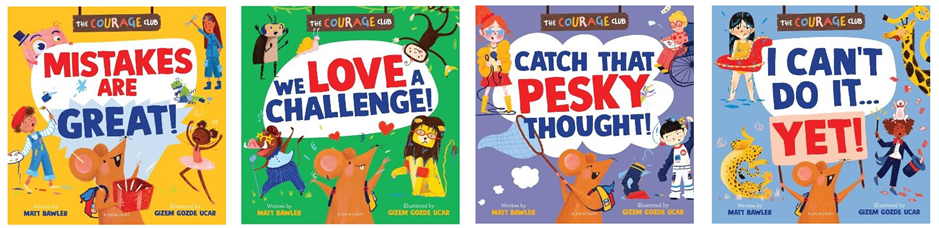
Teacher review (I Can't Do It . . .Yet!): "I think this book has great potential for use across a variety of age groups and abilities, both at home and in the classroom. Its focus on resilience and self-belief makes it a valuable resource for supporting children's emotional development, while the humour and relatable situations ensure that the message never feels heavy-handed."
Q&A with Matt Bawler: Supporting children's mental health with The Courage Club
"What could we give ALL children right from the start that might help them build
strong foundations before life's bigger challenges arrive?"
1. Can you tell us a little about yourself and how you started writing books for children?
I've been a teacher for over 20 years now and currently work as Head of Early Years and Wellbeing for a school in South London. The Courage Club has grown out of years spent on the classroom floor with young children, seeing first-hand the things they struggle with, the things that help them flourish and, particularly, the incredible impact that stories can have.
My journey into writing stories for children's mental health actually began with one child. She was in Nursery and was one of the most challenging children I've ever had the privilege of teaching. Normally she would be throwing chairs and hurting others but I realised that, whenever I read a story at carpet time that was about whether a character was loved or not, she would stop, transfixed and would not move from her spot till she knew. As I read Mr Pusskins by Sam Lloyd, I could see the story was connecting with something much deeper inside her.
Over the following months, I began noticing how particular stories could reach children in ways that simply telling them something often couldn't. A story creates this wonderful safe distance where a child can explore something difficult through somebody else before having to make it about themselves. That sent me down a huge research rabbit hole into early childhood, neuroscience, psychology and mental health.
The more I learnt, the more convinced I became that we need to stop waiting until children are struggling before giving them tools to help. We need to go further upstream and start building those foundations right from the beginning. Eventually those two things came together: my love of stories and my passion for proactive mental health. The Courage Club grew from there.
2. What is The Courage Club and what do you hope children will find in these stories?
At its simplest, The Courage Club is a collection of fun picture books designed to help children discover that courage isn't something some people magically have and others don't. It's something we can all grow. Underneath the stories is a much bigger idea about proactive mental health. So much of our approach to mental health is still largely reactive: we wait until somebody has a problem before trying to step in and fix it. I want us to ask what happens if we go much further upstream. What could we give ALL children right from the start that might help them build strong foundations before life's bigger challenges arrive?
The Courage Club is built around three core strands of child development: Self-Esteem (How I see myself); Character (How I engage with the world around me and inside); and Resilience (How I respond to challenge and setback). These are introduced to the children as: "I am, I can and I will!"
Most importantly though, I want children to enjoy the books! I don't want them to feel like disguised textbooks. I want children laughing at Mistake Monsters and Pesky thoughts and cheering on a dung beetle while, almost without realising it, picking up language and ideas they can carry back into their own lives. If a child closes one of the books thinking, "Maybe I can try that!", then we've achieved something pretty special.
3. What kinds of issues do you explore in each of The Courage Club picture books?
The first four books all sit predominantly within the Resilience strand and explore different ways we respond when something feels difficult.
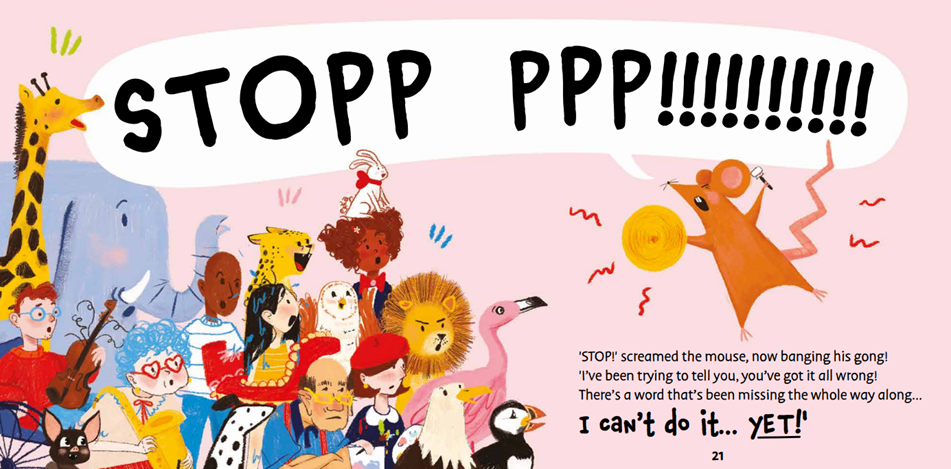
I Can't Do It… YET! is about perseverance. Frances the cheetah and her friends are trying to learn new things and discovering that they can't do them straight away. The little word YET completely changes the sentence. "I can't do it" sounds like the end of the story. "I can't do it YET" says the story is still being written.
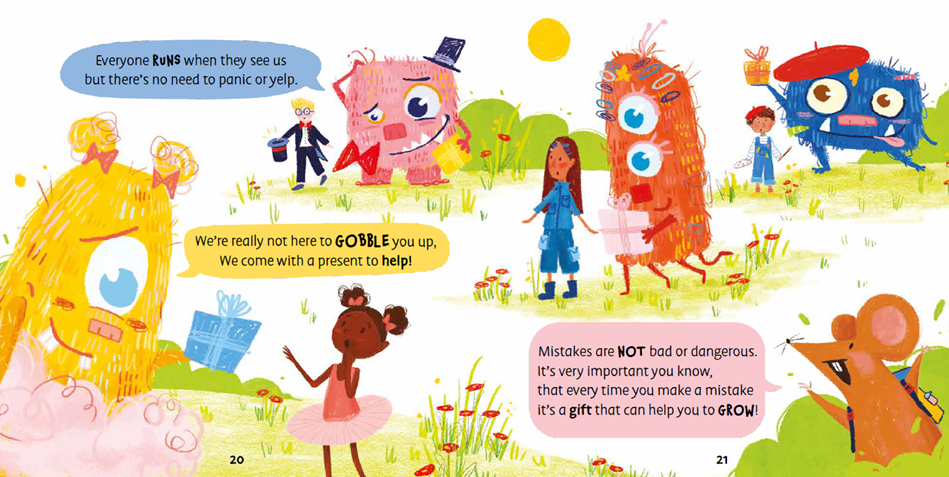
Mistakes Are Great! tackles our fear of getting things wrong. Children can become frightened of mistakes surprisingly young, particularly when they begin comparing themselves with others. The story turns mistakes from scary monsters into something useful: clues that help show us where to go next. Rather than "Oh no, I got it wrong!", we want to build a response of "Brilliant! What can I learn from this?"
We Love a Challenge! takes that one step further. Rather than shrinking back from hard things, this playful story invites us to change our relationship with challenge and see it as a good thing. In the story, Ali the African Land Snail and his friends discover that big challenges become possible through small steps, perseverance, teamwork and a little help from a very determined dung beetle!
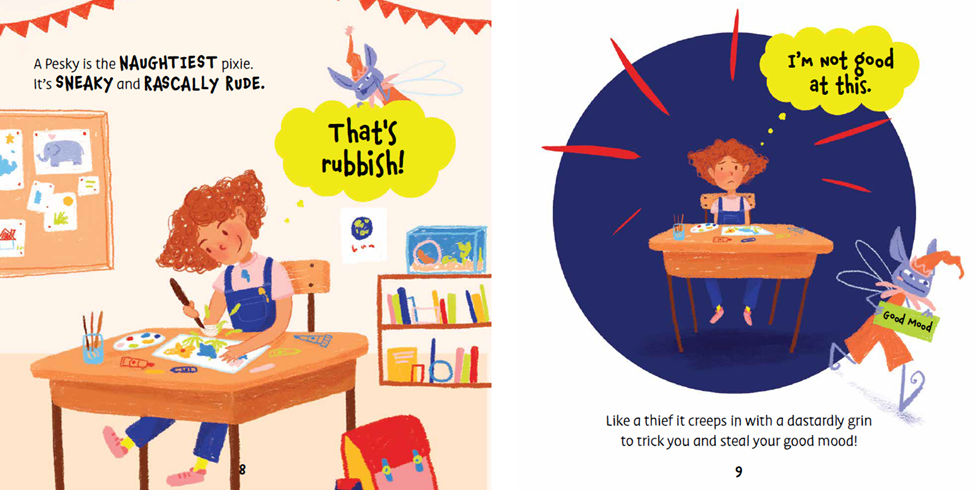
Finally, Catch That Pesky Thought! introduces children to the idea that not every thought that pops into our head is true. Those pesky thoughts that whisper "You can't", "You're rubbish" or "You'll never . . ." don't have to be in charge. Through a fun story involving cheeky Peskies (who like to whisper negative thoughts in your ear to try and steal your good mood); children learn to notice them, catch them and challenge them.
Across all four, the message isn't that difficult things suddenly become easy. It's that children can increasingly discover that they have agency in how they respond to them.
4. Why did you decide to approach how children face challenges through stories, with a mouse as the narrator? Were the stories challenging to write?
Stories are incredibly powerful because they allow children to experience something without having to be directly inside it. Asking a young child, "Are you frightened of failing?" can feel enormous. Asking, "Why do you think Max is frightened of the Mistake Monsters?" suddenly gives us somewhere safe to begin.
The research around stories, empathy and social-emotional learning is fascinating, but I've also witnessed it hundreds of times as a teacher. Children live through characters. They worry for them, laugh with them, shout advice at them and often recognise bits of themselves in them. That's why stories felt like the perfect vehicle for The Courage Club.
The mouse grew from wanting a recurring character who wasn't some all-knowing superhero arriving to fix everything. He's a little wise guide who travels alongside the characters. That's important because the answer ultimately needs to come from the children themselves. The mouse might point something out or ask a question, but the characters still have to take the next step.
And yes - they were a challenge to write! Trying to take quite complex ideas from psychology, neuroscience and education and turn them into a funny picture book that a four-year-old actually wants read again is much harder than writing about the theory for adults. Every message has to earn its place inside the story.
That's also where Gizem's illustrations become invaluable. A picture book isn't words with pictures added afterwards. The words and images tell the story together, and Gizem brings emotion, humour and a whole extra layer of meaning that simply isn't there in the text alone.
5. Do the stories follow researched techniques in changing how children - and adults! - perceive challenges? How life-changing do you feel this could be for young children's futures?
Very much so. The stories may be playful, but the thinking underneath them is grounded in years of research and practice. Growth mindset is a great example within these first four books - particularly the work around how we perceive effort, mistakes and challenge. That said, The Courage Club deliberately draws widely from child development, neuroscience, positive psychology, psychotherapy and social and emotional learning.
What interests me most is translating all that research into something a young child can actually use. A four-year-old doesn't need a lecture on the neuroscience of learning. They need something memorable like "I can't do it… YET!" that they can access at the exact moment something feels impossible. I've seen how powerful that can be. I've heard children spontaneously say to one another, "It's not that you can't do it, you just can't do it YET!" or remind a friend that mistakes are how we learn. At that point it isn't an adult teaching them anymore. The language is becoming theirs.
Can that be life-changing? I think we have to be careful about claiming that any four picture books can determine a child's future! But can the repeated experiences, language and thinking we give children during their earliest years influence the foundations upon which that future is built? Absolutely. That's the exciting bit for me. We're not trying to make childhood challenge-free. Quite the opposite. We're helping children gradually discover: "Hard things will come but I have the tools and I'm up for the challenge!"
6. How do you suggest the stories are used with children - for example, before they have the problem or when the issues occur?
Before! Definitely before! That's really at the heart of the whole Courage Club philosophy. If the first time we talk to a child about mistakes is while they're devastated about making one, we're trying to introduce a completely new idea while their brain is already dealing with the emotion. It's a bit like trying to teach somebody to swim after they've fallen in the river. Instead, let's learn to swim beforehand.
Read Mistakes Are Great! in the good times. Laugh about Mistake Monsters. Talk about mistakes you've made yourself. Build that shared language together. Then, three weeks later, when the tower falls down or the drawing goes wrong, an adult doesn't need to launch into a huge explanation. You can simply say, "Brilliant! Mistakes are GREAT! What can we learn from this?' The story is already there.
That's proactive mental health in miniature: building the tools before we need them. Of course, the books can absolutely be revisited when a particular issue arises too. In fact, that can be really powerful because the child already has a familiar character and story to connect their experience to.
7. What kind of advice do you provide for the adult who is sharing The Courage Club stories with children?
One of the most important parts of the series for me is that every book contains a section specifically for the "BIG KIDS (a.k.a. the Grown-ups)" at the back; because ultimately children don't develop these things in isolation. They develop them through shared relationships with us.
The adult sections explain the bigger thinking behind each story and, importantly, how our own language and behaviour can either reinforce or undermine its message. For example, we can tell children that mistakes are great until we're blue in the face, but if they then watch us become furious because we've taken a wrong turning or dropped something on the floor, they'll probably believe what we do more than what we say.
So I encourage adults to model the ideas themselves. Make a mistake and say, "Oh brilliant - what can I learn from that?" Let children see you struggle with something. Use "yet" about yourself. Catch one of your own pesky thoughts. There's a reason the series is about helping children and their adults build bravery and take on hard things together. We're all in The Courage Club!
8. Are there activities or discussions you'd suggest following readings of the books? How else would you weave the stories' messages into everyday life?
Absolutely, although I think the most powerful activity is often simply to keep the language alive. After I Can't Do It… YET! you could make a "YET list" together: things everyone would like to be able to do but can't do yet. Adults should add theirs too!
After Mistakes Are Great! you could celebrate a Mistake of the Day and ask what it taught you. After We Love a Challenge! choose a class or family challenge that looks difficult and break it into tiny steps. Celebrate the effort and problem-solving rather than just whether you eventually succeed. And after Catch That Pesky Thought! children could draw their own Pesky Thought character, write or dictate what it sometimes whispers, then come up with something they could say back to it.
But the real magic comes afterwards. When somebody says, "I can't do it," add "yet". When something goes wrong: "Mistakes are GREAT! What did we learn?" When something looks difficult: "Ooh… we LOVE a challenge!" When that little negative voice appears: "Hang on… is that a pesky thought?"
Over time those phrases can become little mental hooks. Eventually, hopefully, the adult doesn't need to say them at all because the child's own inner voice has begun saying them instead.
9. How important are Gizem Gözde Uçar's illustrations in supporting the message in each book?
Hugely important. Gizem has this wonderful ability to make the emotional world of the stories instantly accessible while also making them brilliantly funny. For young children especially, so much of the meaning is carried visually. They may not be able to explain what frustration or self-doubt feels like, but they can look at a character and immediately say, "That's how I feel!"
The illustrations also stop the books from becoming too worthy or instructional. We're dealing with things like failure, self-doubt, negative thoughts and frustration - but children shouldn't finish a Courage Club story feeling they've attended a wellbeing seminar! They should feel like they've been on an adventure. Gizem's humour, expressions and wonderful heart found in all the secret little details hidden across the spreads make that possible.
The Mistake Monsters and Pesky Thoughts are particularly good examples because she's taken something quite abstract happening inside a child's mind and turned it into something they can actually see, laugh at and talk about. I think that's incredibly powerful. Once you can draw a fear, mistake or pesky thought, somehow it already feels a little less powerful and a little more manageable.
10. Is there more to come from The Courage Club?
Definitely! These first four books are really only the beginning. The wider Courage Club framework has three main strands: Self-Esteem ('I am'); Character ('I can'); and Resilience ('I will'). The first four books have largely begun within resilience, looking at how children respond to mistakes, struggle, challenge and unhelpful thinking.
I'd love future books to travel much further into the other areas too: belonging, feeling loved and valued, identity, emotions, friendships, kindness, risk-taking, self-regulation and the different "tools" children can learn to use when navigating both their inner world and the world around them.
The dream is that, over time, the books build into a sort of library for growing up - not one that promises children they'll never experience difficult things, because they will, but one that keeps reminding them they don't have to face those things empty-handed or alone! Ultimately it all comes back to those three little statements: I am, I can and I will!
11. And finally, which of your Courage Club picture books has the most challenging message for you personally?
Probably Mistakes Are Great! - which is slightly inconvenient when you've written a whole book telling everybody else how brilliant mistakes are! I think there's a difference between intellectually knowing that mistakes are important and genuinely being comfortable making them yourself.
Like lots of adults, I can be a perfectionist. If I care about something, I want to get it right. Writing books has actually been a brilliant test of that. You write something, change it, get feedback, discover something doesn't work, rewrite it, change it back, then sometimes realise the thing you originally deleted was better all along! So ‘Mistakes Are Great!' is probably the message I most regularly appreciate for myself but, in all honesty, I regularly find myself using all four phrases on a daily basis for myself as much as with others.
There's something quite liberating about that, though. The Courage Club was never supposed to be an adult standing above children saying, "Here are all the things I've mastered - now you learn them too." It's a club. We're learning together. And I think children seeing adults struggle, make mistakes, laugh about them and try again might actually be one of the most powerful messages we can give them.

Creative Challenge: The Mistake Monster Challenge!
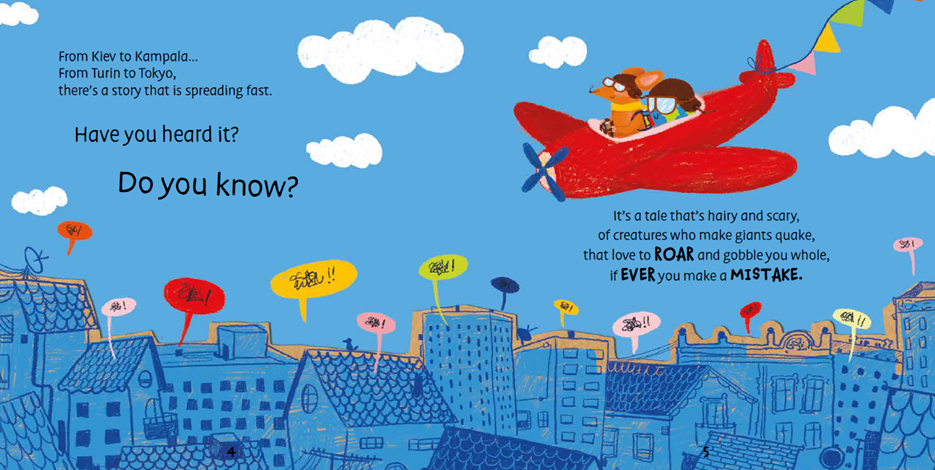
In Mistakes Are Great!, there is a rumour going round about Mistake Monsters that will jump out and try to gobble you up if you ever make a mistake! Initially, the children in the story run away from their monsters but soon discover something surprising: Mistake Monsters aren't really there to eat you . . . They come with a present to help you! Every mistake carries something inside it that can help us learn, grow and get better.
Now it's your turn to create your own Mistake Monster. What does yours look like? Is it huge and hairy? Tiny and spotty? Does it have six arms, enormous ears or three wobbly eyes? Draw your Mistake Monster and then draw it carrying a present just for you. What do you think might be inside?
The next time you make a mistake, see if you can get out your Mistake Monster and think about what might be inside the present box just for you. Rather than seeing your mistake as a bad thing, see it as a gift and ask yourself: "What can I learn from this mistake?"

School Visits by Matt Bawler
Yes! I absolutely love visiting schools because The Courage Club was born in a classroom, so taking the books back into schools feels like bringing them home. Visits can be adapted for different ages and settings, but I like them to be highly interactive rather than simply me standing at the front talking. We explore some of the stories together, meet the characters and get children joining in with the key Courage Club phrases - from "I can't do it . . . YET!" and "Mistakes are GREAT!" to "We LOVE a Challenge!" and "Catch that Pesky Thought!"
I also love introducing children to the ideas behind being an author: where stories come from, how a tiny idea becomes a finished picture book, and - very appropriately for The Courage Club - how many mistakes, challenges and things that don't work happen along the way! Depending on the school, visits can also include workshops and activities with children, book signing and sessions for staff or parents exploring the wider thinking behind proactive mental health and how we can build these ideas into everyday life.
The aim is for children not just to have heard an author talk, but to leave feeling that they are genuinely members of The Courage Club themselves - with some new language and tools they can start using straight away. Schools interested in arranging a visit are very welcome to get in touch: Email: [email protected] Or you can find me at LinkedIn or Instagram @mattbawler
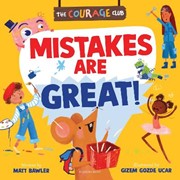 Mistakes are Great! (The Courage Club)
 Catch That Pesky Thought! (The Courage Club)
 We Love a Challenge! (The Courage Club)
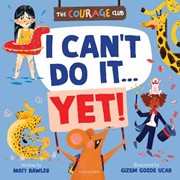 I Can't Do It... Yet! (The Courage Club)