PISA 2025 report on reading skills shows English children pulling ahead internationally
Posted on Tuesday, September 8, 2026
Category: News
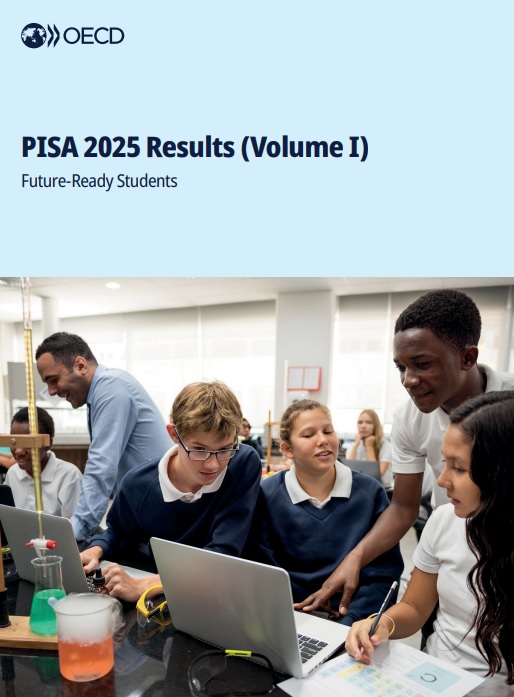
The 2025 Programme for International Student Assessment (Pisa) report on international reading, maths and science tests, which is published every three years, suggests that English children have pulled ahead of their international counterparts in their reading skills.
However, the report also shows that England's strong performance is due to reading skills in other countries declining, rather than improvements in English students' reading skills. England scored an average of 497 in the PISA 2025 reading tests, compared to 496 in 2022, set against an international decline.
Run by the Organisation for Economic Cooperation and Development (OECD), the Pisa tests assess 15 year-olds on their ability to solve problems, think critically and communicate, before asking them a wider range of questions about their education in a questionnaire. The report's findings show that average performance across OECD member countries dropped to the lowest levels recorded in science, mathematics, and reading, accelerating a slide seen since 2018.
The top performers included Singapore, Japan, Korea, Estonia, Chinese Taipei, and the UK, all in the top ten. In Western Europe, traditionally strong countries including France, Germany, the Netherlands, and Finland saw sharp score drops, with up to one in three students lacking basic functional literacy and maths skills.
England's students scored significantly above the OECD average of 461, ranking as the second-highest-performing system outside the Far East (behind only Estonia). Within the UK, the 2025 Programme for International Student Assessment (Pisa) saw reading and maths scores slump in each UK nation except England, while all four saw an improvement in science, especially in England.
The report also revealed a worldwide decline in teenagers' reading skills. Teenagers were losing the skills that "matter most in the age of AI", it said, including their ability to critically evaluate information from different sources. It reflects on a rise in the number of "hasty readers", who rush through texts to give quick but incorrect answers, which has nearly doubled between 2018 and 2025. It also found that those from "relatively well off" families more likely to be 'hasty readers'.
Although the UK performed well overall, the rankings varied significantly again, with results showing England, where the curriculum is significantly different, pulling consistently ahead of Northern Ireland, Scotland and Wales.
Critics point out that England's high relative ranking is driven more by a sharp global decline in reading scores (an average drop of 14 points across OECD trend countries) rather than actual academic improvement at home.
Analysts attribute the international slide and shallow comprehension habits to screen fatigue, social media scrolling, and incessant smartphone use eroding deep-reading attention spans. The report also highlights the gap in achievement for disadvantaged pupils in England. While they perform strongly relative to peers in other Western European nations, a significant attainment gap of 66 points remains between the most and least disadvantaged students in English schools.