University of Cambridge: Think Big: The Power of Volcanoes
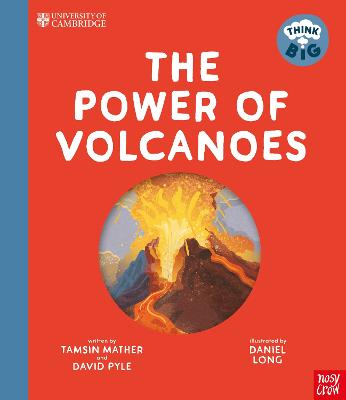
By Author / Illustrator
Professor Tamsin Mather, Professor David Pyle, Daniel Long (illus)
Genre
Non Fiction
Age range(s)
7+
Publisher
Nosy Crow
ISBN
9781805133285
Format
Hardback
Published
04-06-2026
Synopsis
Have you ever wondered what makes a volcano erupt? Or what happens when molten lava meets the sea? From towering mountains that spit fire to hidden underwater volcanoes shaping the ocean floor, this beautifully illustrated book takes young readers on an explosive journey into the heart of Earth's most powerful natural wonders.
Discover the secrets of volcanoes - from the science behind eruptions and the different types of volcanoes around the world, to the daring work of volcanologists who study these fiery giants up close. Find out how volcanic eruptions have shaped our planet, created new islands, and even changed the climate.
Part of a fascinating series of illustrated single-subject STE(A)M books for children aged 7-10, exploring some of the universe's most fascinating subjects. Think Big: The Power of Volcanoes is written by leading volcanologists and Oxford professors, Tamsin Mather and David Pyle and is published in collaboration with the University of Cambridge and the Sedgwick Museum;
Clear, accessible explanations and easy-to-digest sections make complex topics engaging and easy to understand. The bright, engaging illustrations on every page bring the drama and beauty of volcanoes to life.
Also in the University of Cambridge: Think Big series: Think Big: Artificial Intelligence; Think Big: The Speed of Light; Think Big: Secrets of Bees
Reviews
Jane
What child, seeing Think Big: The Power of Volcanoes on the library display, would not want to pick it up and explore beyond the front cover peep-hole to the fiery depths of this hot topic? Certainly, they'll be attracted by the eye-catching cover, which immediately conveys the book's theme. But beyond, they will find glossy pages filled with interesting facts to ignite their enthusiasm for volcanoes: what they are, their different types, where they're found (including in space), when they erupt (and how that can be predicted), their power to destroy (eg Pompeii), create (new rocks and rock forms) and impact our climate.
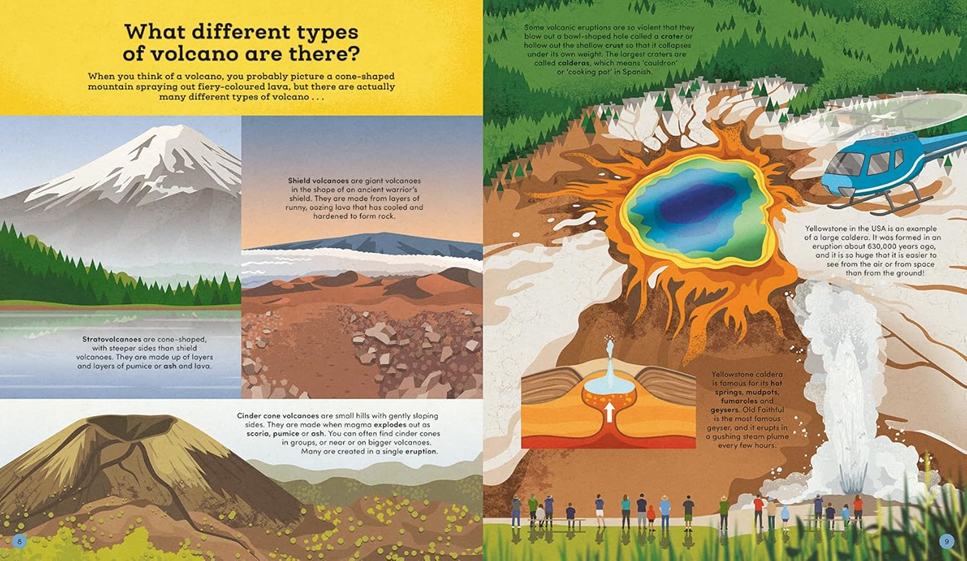
The authors are volcanologists who have spent years studying these phenomena, so they are super-qualified to write such a book, just as artist Daniel Long is the perfect choice as illustrator. His graphics (a combination of simple diagrams and colourful pictures) contribute enormously to explaining difficult concepts.
In schools where children study volcanoes or natural disasters as part of the curriculum, extracts from this beautiful book could be read aloud in classrooms. It would be as well, however, to have at least another copy in the school library, because it is sure to be popular, and not just with KS2 would-be scientists. Younger children without the skills to read it independently would still gain from being shown (or browsing) the pages, thus introducing them to a truly exciting realm of knowledge.
32 pages / Reviewed by Jane Rew, school librarian
Suggested Reading Age 7+
Jacqueline
This non-fiction text has the added attraction of powerful illustrations and is part of the Nosy Crow/University of Cambridge collaboration called 'Think Big - Surprising Science for Curious Minds'. Each double page spread in the book answers a specific question about volcanoes, with additional information on the page.
It is at this point that I have to confess I am completely fascinated by volcanoes and have visited a few myself, so Think Big: The Power of Volcanoes was right up my street. Written in a chatty and accessible style, this is an easy and informative read. The illustrations by Daniel Long clearly demonstrate the things being discussed on each page in both diagrams and pictures. I think the only criticism might be that sometimes the small font size is a bit lost when superimposed on the pictures and some children might find the text difficult to access.
Of course, the famous eruption of Vesuvius in 79 CE is covered - Pompeii and Herculaneum being amongst the most fascinating of ancient ruins. But there are also volcanoes in space, which I thought was an excellent addition. Some of those volcanoes make the ones on Earth look tiny in comparison. The page about how scientists study volcanoes is very interesting - for many years my son wanted to be a volcanologist and he would really have appreciated that information.
With a great glossary at the back, this book really is a good addition to the selection on volcanoes and would encourage children to ask their own questions.
32 pages / Reviewed by Jacqueline Harris, teacher
Suggested Reading Age 7+
 The Cave Explorer
 African Queens: Incredible Stories of Africa's Legendary Women Leaders
 Star, Moon, Zoom!
 Factology: The Maya: Open Up a World of Information!